528 The Naming of Bryn Athyn (1899)

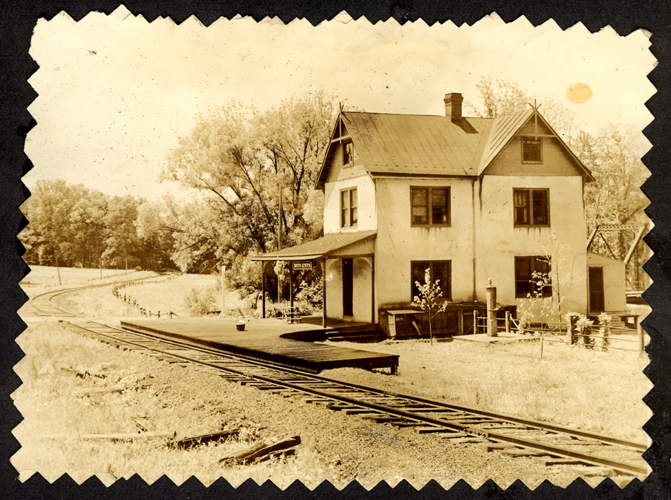
bastation.jpg“Huntingdon Valley, Pa.-Correspondents will please note: There is no such post office as Bryn Athyn. Letters so addressed will be apt to go to the Dead Letter Office at Washington. It is now the name of the nearest railroad station, however (formerly ‘Alnwick Grove’), and when the community has largely increased we may hope for greater postal and other conveniences. But of the future no man knoweth” (”Church News: Reports and Letters,” New Church Life 1899, 159).

When this notice appeared in New Church Life in 1899, the name “Bryn Athyn” had recently been chosen for the fledgling New Church community in Montgomery County, Pennsylvania. The intended meaning of the name was “hill of unity”—”Bryn” being the Welsh word for “hill,” and “Athyn” meaning “cohesion” (or so the community members believed). Today, however, if you look in The University of Wales Dictionary, said to be the most comprehensive and extensive dictionary of the Welsh language, you will find the word “Bryn,” but not the word “Athyn.”

spurrellarchivenote.jpgIt all began in 1898, when a “Village Association” was formed to take care of the wide variety of civil affairs facing the developing New Church community. During the previous decade, hundreds of acres of farmland had been purchased by John and Gertrude Pitcairn for the purpose of founding a New Church community and school, and the new settlement needed infrastructure. It also needed a name, and on September 10, 1898, a special meeting of the Village Association was called to discuss this matter. A formal name was considered to be the first step in securing a railroad station, a telegraph office, and eventually a post office.

The process was a slow one. The search for a name went on for more than a  year, with many different suggestions proposed, including “Bonnnie Brae,” “Collyn,” “Gwynmont,” “Hillcrest,” “Manoli,” “Ridgemont,” “Rothlyn,” and even “Swedenborg.” One name, “Hillbrook,” was formally chosen in May of 1899, but when it failed to receive sufficient community support it was abandoned. Finally, on September 25, 1899, “Bryn Athyn” was chosen by the Village Association by a vote of 6 to 3 (Village Association Minutes, Swedenborg Library, Bryn Athyn, PA).

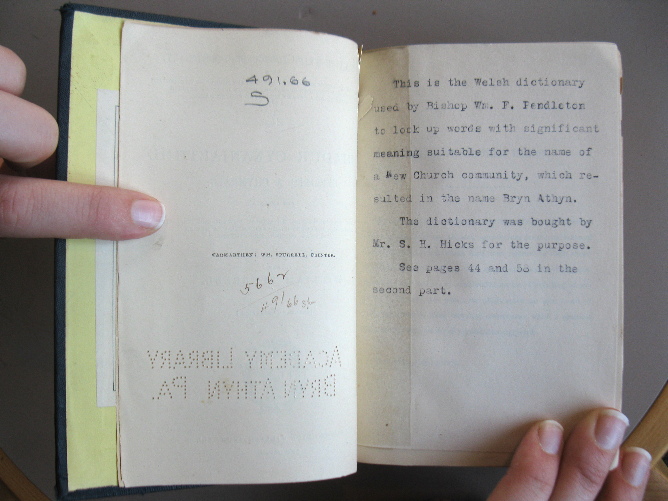
brynentry.jpgathynentry.jpgBryn Athyn was first suggested as a possible name during an Association meeting on February 18, 1899. It was proposed by Bishop William F. Pendleton, who used An English Welsh Pronouncing Dictionary, published by William Spurrell, to look up the two Welsh words. The dictionary was purchased for him by Samuel Henry Hicks, a member of the Association who had been born in Wales and brought to the United States as an infant (see New Church Life, 1910, 51). The actual dictionary has been preserved in the Academy of the New Church Archives, Swedenborg Library, Bryn Athyn, PA. Bound together with the book is a typewritten note explaining the dictionary’s significance. Pencil marks are apparent beside the entries for “Bryn” and “Athyn” (see photos), with the entry for “Athyn” reading as follows: “Athyn a[djective], very tenacious; cohesive.”

William Spurrell, the publisher of the Welsh dictionary, believed “Athyn” to be a legitimate Welsh word. However, Athyn is now considered to be a neologism (a newly-created word), and we must go further back than Spurrell to discover its origin. The man who invented the word “Athyn” was William Owen Pughe, the author of A Dictionary of the Welsh Language, first published in 1803. Pughe, a Welsh lexicographer and grammarian, “was unable to resist the charms of the mythologists . . . so consuming was the fire of his passion for things Welsh, and he was sure that if one analysed Welsh it would yield the secrets of mankind’s primeval language. Further, if one dissected or dismantled Welsh words one could then reconstruct the language on rational lines, and extend its scope and use infinitely” (Morgan, Prys. “From a Death to a View: The Hunt for the Welsh Past in the Romantic Period.” In The Invention of Tradition, Eric Hobsbawm and Terence Ranger eds. Cambridge University Press: 73). So it seems that William Pughe “reconstructed” the word “Athyn,” and Spurrell incorporated this word and other examples of Pughe’s neologisms into his own dictionary, a copy of which was used by the founders of Bryn Athyn in the naming of their new community.

In Through the Looking-Glass, Lewis Carroll writes, “When I use a word,” Humpty Dumpty said in a rather scornful tone, “it means just what I choose it to mean; neither more nor less.” Perhaps it is in this spirit that we should regard the question of the meaning of “Bryn Athyn.” All matters of Welsh lexicography aside, the men who named Bryn Athyn intended the words to mean “hill of unity”—neither more nor less.

The editors of NewChurchHistory.org would like to thank the Rev. Stephen Cole for suggesting this New Church History Fun Fact, and for providing his own personal research materials for our use.

Photos: The photograph of Bryn Athyn Station (formerly Alnwick Grove Station) was taken by Camille Vinet, and is in the collection of the Academy of the New Church Archives, Swedenborg Library, Bryn Athyn, PA. In 1902 a new building was constructed directly across the tracks from the former station to serve as a combined train station and post office. The building in the photograph is now a private residence. The Welsh dictionary pictured in the photographs is the one used by William F. Pendleton. It is stored in the rare book vault of the Swedenborg Library.

Further Reading:

An online source with additional information about the Welsh origin of the name Bryn Athyn

Klein, Eldric. “The Village Community Gets a Name.” In Bryn Athyn: from these beginnings. 50th anniversary of the incorporation of the borough of Bryn Athyn, 1916-1966: 5-11

Pearce, Ruth L. “Welsh Place-Names in Southeastern Pennsylvania.” Names, vol. 11, No. I (March 1963)

Questions and comments may be addressed to the editors at info@newchurchhistory.org

523 200th Anniversary of the Birth of Emanuel Swedenborg (January 29, 1888)

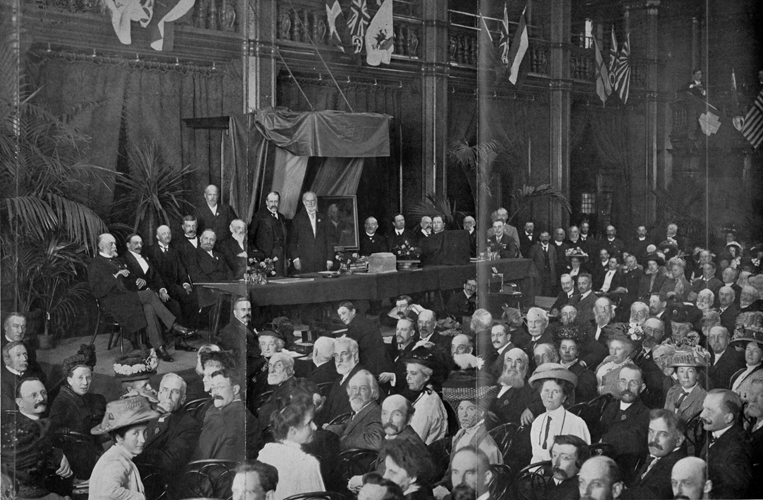
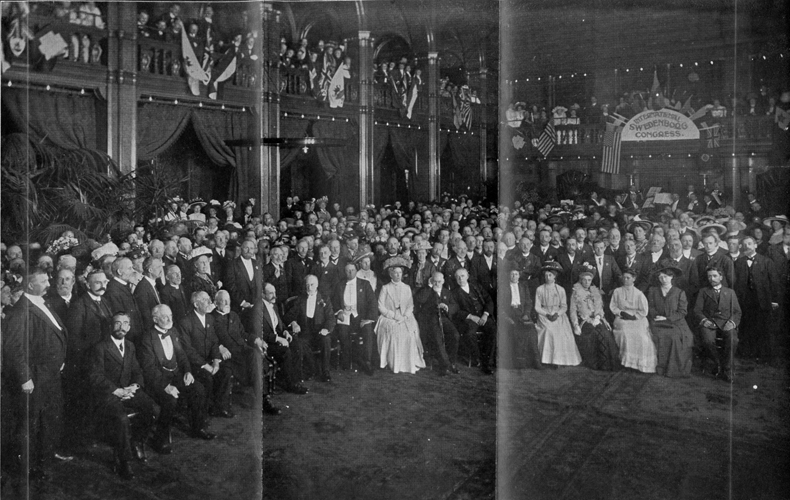
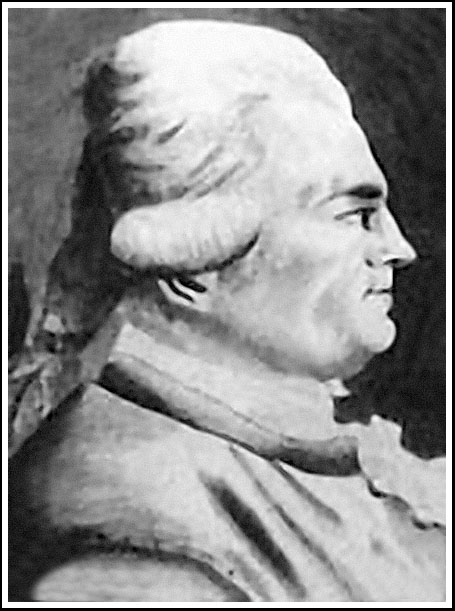
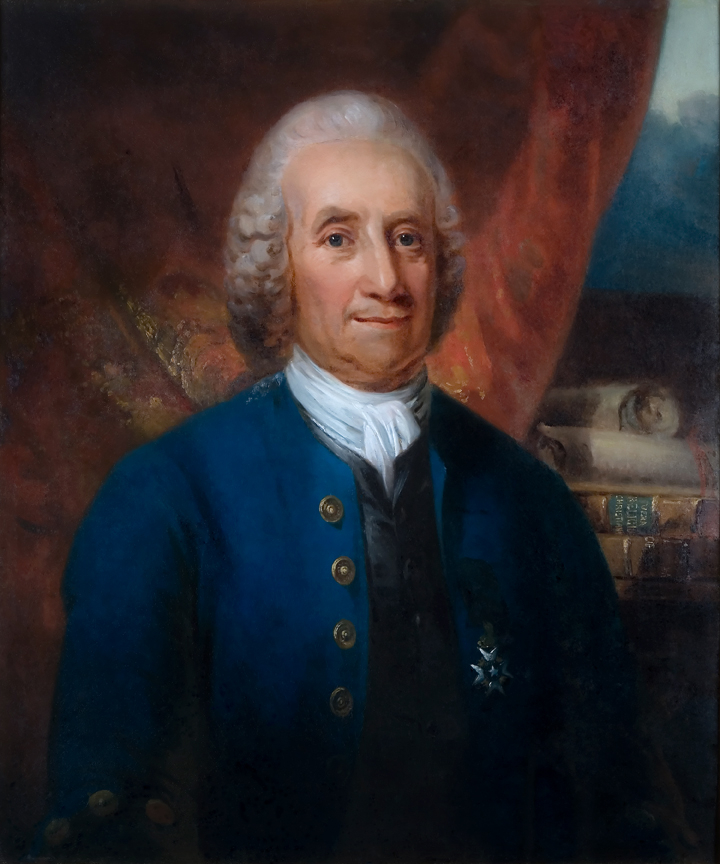
swedenborgportraitjan10.jpg“More than two hundred persons, among whom were a great number of ladies, assembled yesterday in the Gala-rooms of the Grand Hotel [Stockholm] in order to celebrate the bi-centennial of the birth of Emanuel Swedenborg. . . . Noteworthy among the participants were the former Minister of Foreign Affairs, Baron Hochschield [sic], the Lord Chamberlain Baron Carl Jevard Bonde, the President Woern, the Professors Baron Nordenskjold, Victor Rydberg, [Hugo] Gylden, Members of the Academy of Science, higher officials, prominent physicians, members of the Diet, manufacturers, merchants, members of the New Church in this place, and others” (January 30, 1888 entry from Stockholm’s Dagblad (Newspaper) in New Church Life 1888, 41).

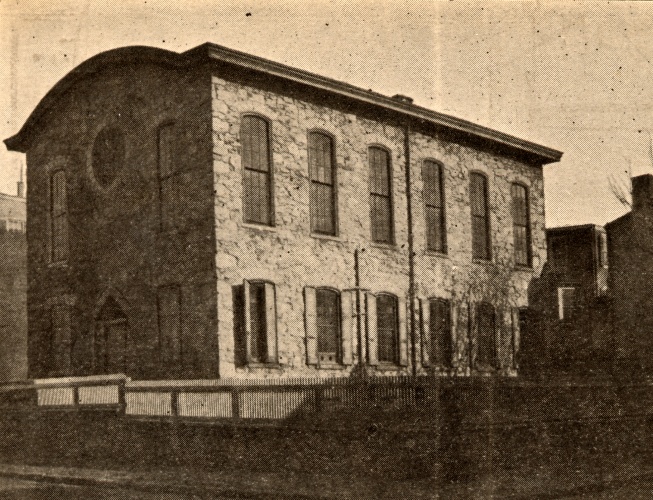
cherrystreetjan10.jpgAcross the Atlantic in Philadelphia, Pennsylvania, members of the Academy of the New Church were also celebrating the bicentennial of Emanuel Swedenborg’s birth. The festivities took the form of a public meeting held at their old building on Cherry Street (see photo, left). Continue reading » » » »

518 Founders Day (January 14, 1904)

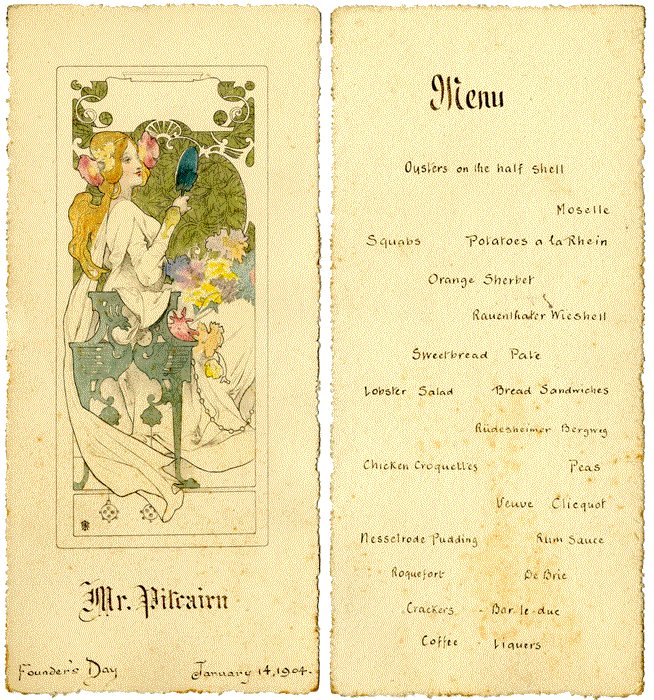
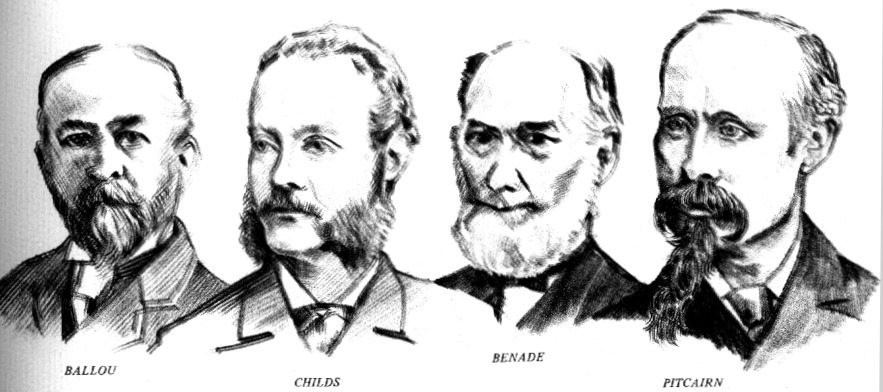
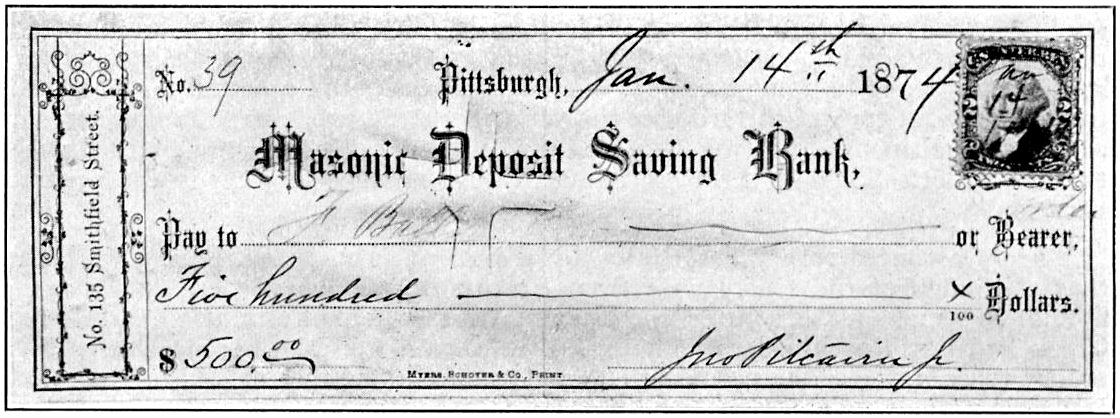
menu1904.jpgThe Academy of the New Church began its formal existence on the 19th of June, 1876, but January 14th, 1874, was regarded as the unofficial beginning of the organization and celebrated as Founders Day for many years.  On January 14th, 1874, John Pitcairn wrote a check for five hundred dollars in order to defray the costs of a proposed publication to begin “a reformatory movement in the New Church” (New Church Life 1911, 189). Two days earlier, a group of men had met at the Atlantic Garden restaurant on Diamond Street in Pittsburgh, Pennsylvania, and formulated the idea for this movement. Those present were Frank Ballou, Walter C. Childs, William Henry Benade, and John Pitcairn (see photo, below).

foundersjan10.jpgFounders Day celebrations did not begin until 1894, and initially the John Pitcairn check, dated January 14th, 1874, was used to determine the celebration date. It was not until 1917 that John Pitcairn’s diary was consulted and the restaurant meeting date of January 12th became the new Founders Day celebration date. Continue reading » » » »

514 Merry Christmas and Happy New Year!

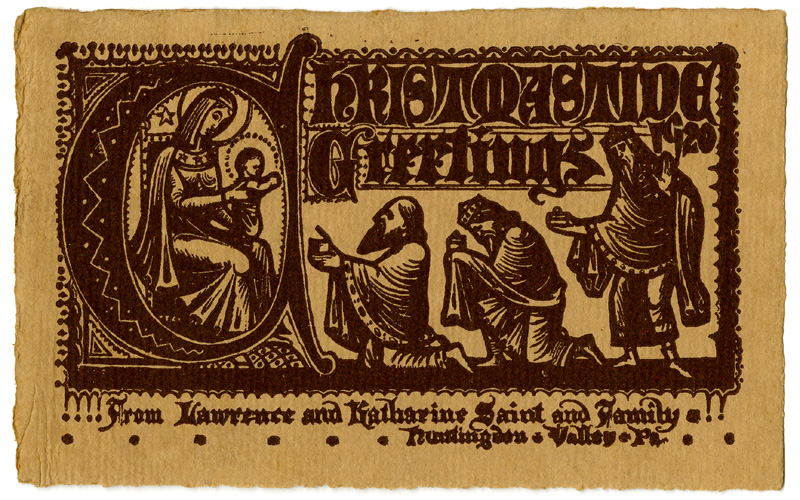
saintcarddec09.jpgThe staff of NewChurchHistory.org would like to wish all of our readers a Merry Christmas and Happy New Year! The three holiday cards included here are from the Glencairn Museum Archives in Bryn Athyn, Pennsylvania. The first card was created by Lawrence Bradford Saint (1885-1961) and sent out by his family in 1920. Saint was a stained glass artist who worked on the Bryn Athyn Cathedral project from 1917 until 1928, when he left to work on the Washington National Cathedral. The figures on this card bear some resemblance to a stained glass Christmas window he made for Bryn Athyn Cathedral in 1919.

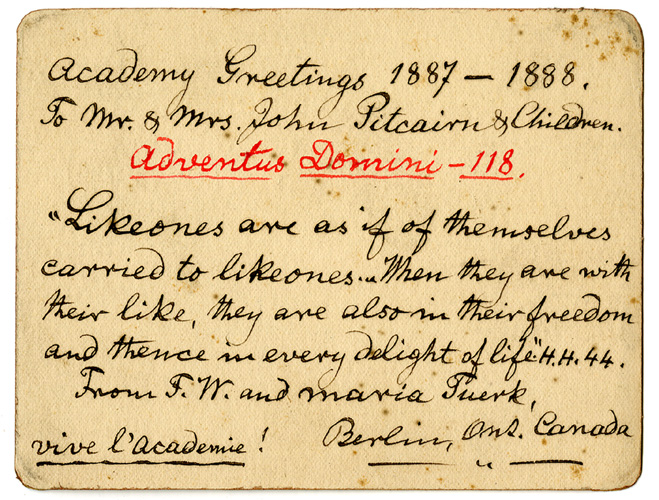
tuerkcarddec09.jpgThe second card was sent to John and Gertrude Pitcairn in 1887 by Rev. F.W. Tuerk and his wife, Maria. Tuerk was the pastor of the Berlin (now Kitchener) society in Ontario, Canada. The card uses the unique New Church dating system in place at the time Continue reading » » » »

508 Theta Alpha Nativities

tanativity.jpgTheta Alpha, an organization for New Church women, began making Nativities in 1941, and continued the tradition until the early 1990s. The Nativities were sent to families who did not live near a New Church congregation. This was part of a larger initiative by Theta Alpha to send religious materials throughout the year to children who could not attend New Church schools. The women of Theta Alpha were inspired in their production of Nativity sets by Emanuel Swedenborg’s concept that children are especially receptive to visual images, and can be introduced into deeper concepts by means of them.

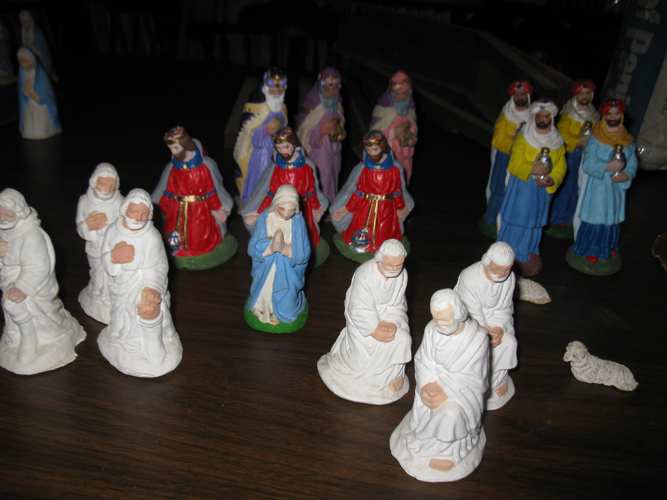
tapaintedfigures.jpg“Children [in heaven] are taught especially by images suited to their natures, images that are unbelievably lovely and full of wisdom from within. In this way, there is gradually instilled into them an intelligence that derives its essence from goodness” (Emanuel Swedenborg, Heaven and Hell ¶335).

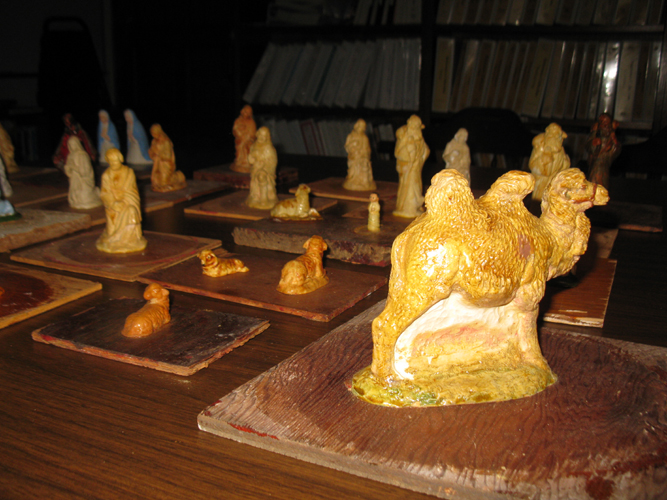
talatexmodels.jpgThe Nativity figures made during the 1940s were constructed from wire and crepe paper, but in 1951 Theta Alpha began a new initiative and started making chalkware figures. The sets assembled that first year included Mary, Joseph, the baby Jesus, one sheep, a manger, and a stable. They were initially made by teams of women working in the basement of Bryn Athyn Cathedral. Gypsum plaster (plaster of Paris) was poured into molds (see photos, below) and allowed to dry; then, after the figures had been extracted from the molds, they were carefully painted by hand (see photo, above). Continue reading » » » »

506 Follow the Star: The Tradition of the Creche (Nativities Exhibit)

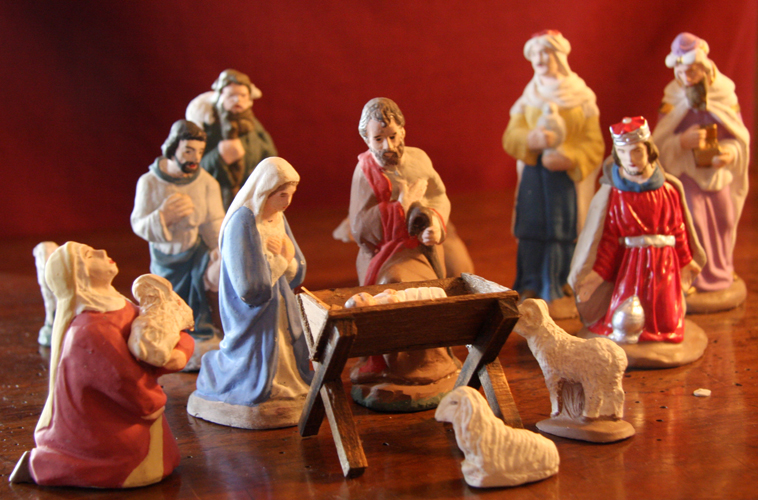
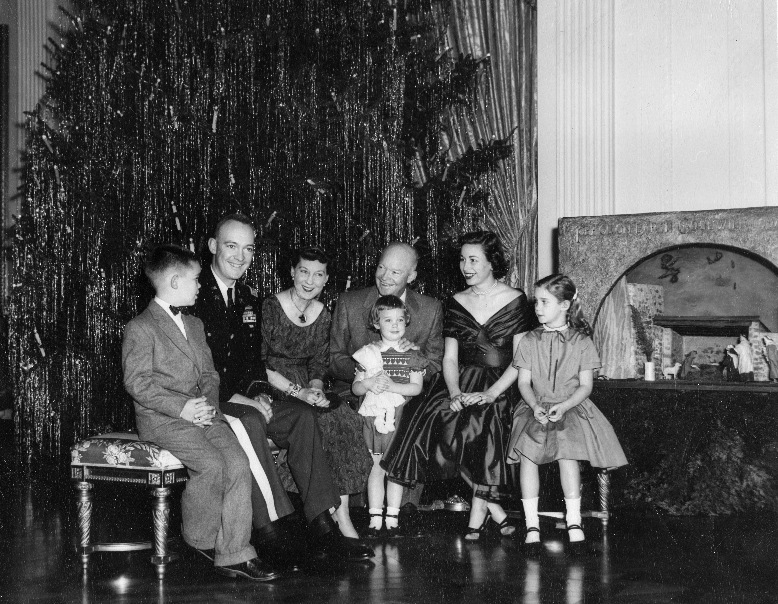
whitehouse1957jpg.jpgVisitors to Glencairn Museum in Bryn Athyn can learn how Christians around the world have adapted the Nativity scene to represent their own cultures through a new exhibit featuring more than 30 crèches from 20 countries. A special section on New Church Nativities includes the “Representation” made by Winfred S. Hyatt (circa 1925), another variation of which was set up in the East Room of the Eisenhower White House in the 1950s (see photo); the original Nativity figures made by Bernice Stroh Sandström (circa 1937); and chalkware Nativity figures made by Theta Alpha, an organization for New Church women. Theta Alpha began making Nativities in 1941 to send to families who did not live near a New Church congregation, and kept up the tradition until the early 1990s. (See our next New Church History Fun Fact for more information on the Theta Alpha Nativities.)

An early New Church Nativity scene, at the Cherry Street Church in Philadelphia, was described in New Church Life in 1889:

“On Christmas Eve, instead of the usual tree, the spaces on each side of the platform in the Hall were occupied by wide tables on which were arranged representations, taken from the literal sense of the Word, of scenes at the birth of our LORD. On the left was a landscape where were flocks of sheep whose attendant shepherds, in attitudes expressive of awe and astonishment, gazed at the angel who announced the glad tidings of the babe in the manger. Continue reading » » » »

502 Francis Bailey, Revolutionary War Printer (1744-1817)

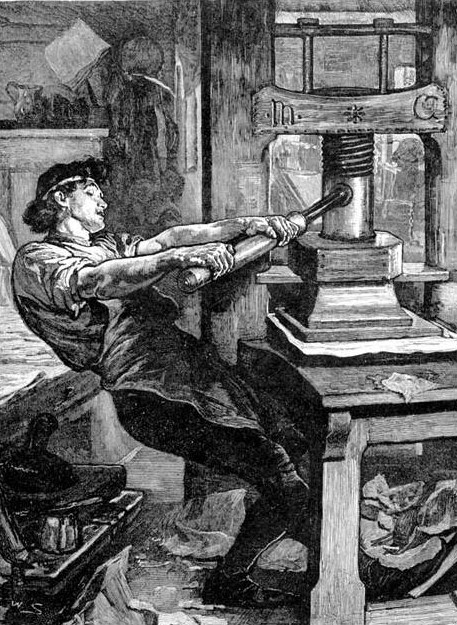
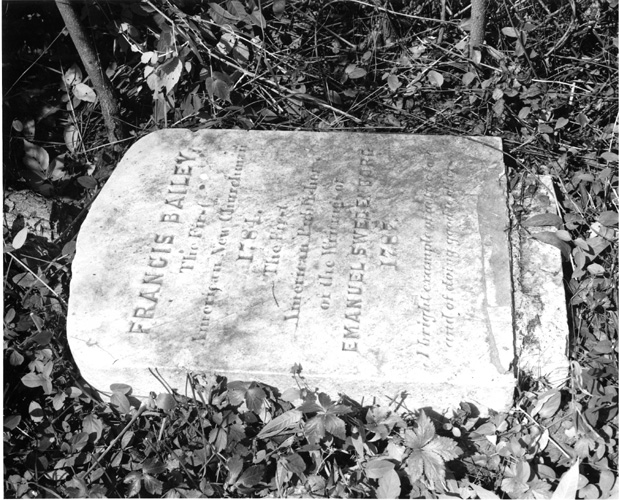
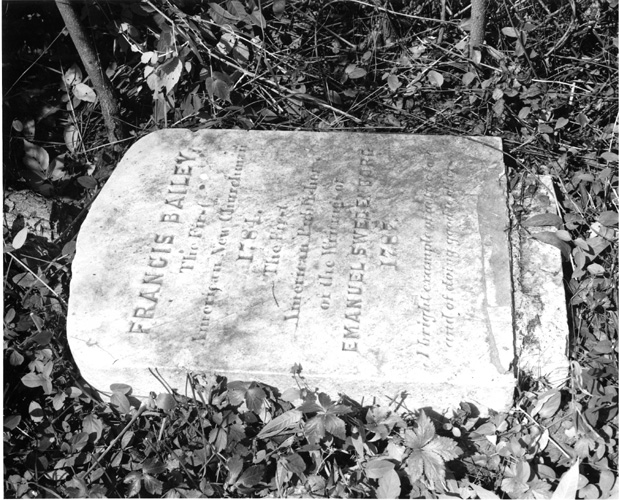
printingpressnov09.jpg“FRANCIS BAILEY/The First/American New Churchman/1784/The First/American Publisher/of the Writings of/EMANUEL SWEDENBORG/1787/A bright example of active love/and of doing good to others” (Francis Bailey tombstone).


baileynov09.jpgFrancis Bailey, Revolutionary War printer and New Churchman, was a remarkable individual. He was born in 1744 in Lancaster County, Pennsylvania, displaying a special talent for mechanics at an early age. In his twenties he decided he wanted to learn the art of printing, but was not willing to apprentice; instead, he spent three weeks learning the basics from his friend Peter Miller, at the Ephrata Cloister religious community. He quickly set up a printing shop in Lancaster, later moving his business to Philadelphia in 1778. He was appointed printer to the State of Pennsylvania and began to edit a daily paper titled The Freeman’s Journal.(Click on “I accept these terms” to see a painting of Bailey in the Cincinnati Art Museum.) 

Bailey was a deacon in the Presbyterian Church when James Glen of Scotland came to America in 1784 and delivered a series of lectures on Emanuel Swedenborg at Bells Book Store in Philadelphia. A number of Swedenborg’s books arrived in Philadelphia from England after Glen had already left the city, and Bailey ended up buying some of them. Becoming convinced of the truth of Swedenborg’s teachings, Bailey used his profession to produce the first publication of a New Church work in America, A Summary View of the Heavenly Doctrine of the New Jerusalem Church (1787). In 1789 he sent out a proposal for publishing True Christian Religion serially; he obtained about fifty subscribers, including Benjamin Franklin, a fellow Philadelphia printer. Two other signers of the Declaration of Independence were also subscribers: Robert Morris and Thomas McKean. Continue reading » » » »

497 Upper Darby, Pennsylvania, Church and Cemetery

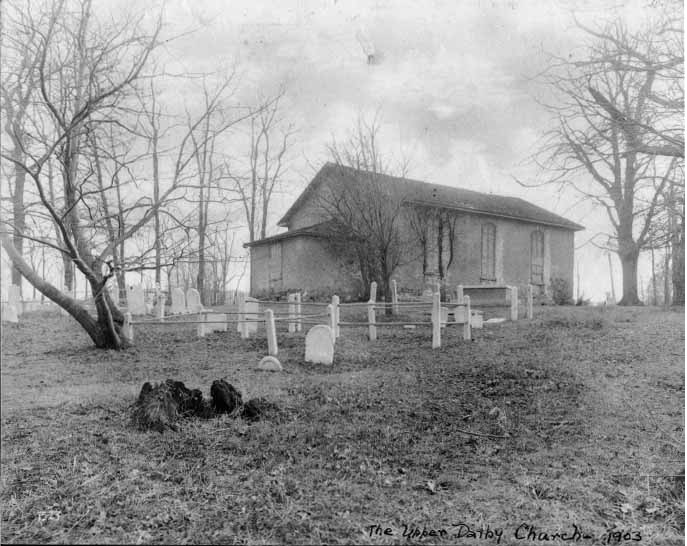
churchoct09.jpg“On this site stood 1830 to 1913, the House of Worship of the Delaware County Society of the New Jerusalem Church, instituted in 1828. This tablet is set up as a memorial of the Society and its faithful members. To acknowledge a God and not to do evil because it is against God, are the two things by virtue of which religion is religion. Divine Providence No. 326. NEW JERUSALEM TEMPLE.”

These words were written on a stone monument erected in 1915, in memory of the Upper Darby church building that had been demolished a few years previously. The church (see photo, top) had been vacant since the late 1800s when the congregation worshipping there became inactive. The historic cemetery surrounding the church remained intact until the late 1960s and 70s, at which time the effects of years of vandalism could no longer be ignored, and it was decided to remove the bodily remains and try to resolve the issue of headstones. Many of the headstones had been irreparably damaged, so a decision was made to bury the ones that could not be saved, and offer the undamaged ones to their descendants (Communication from Philip Alden to David B. Glenn, 8/31/1978). The bodily remains were transferred to an unmarked grave in Mt. Zion Cemetery in Delaware County (http://files.usgwarchives.net/pa/delaware/cemeteries/newjerus.txt).

baileyoct09.jpgThe Upper Darby cemetery was the original resting place of some of the most notable individuals in the history of the New Church in America: Francis Bailey (d. 1817), Rev. Richard De Charms, Sr. (d. 1864), Rev. David Powell (d. 1855), and Rev. James P. Stuart (d. 1882). The headstone of Francis Bailey still exists and is currently located at the Swedenborgian Church at Temenos in West Chester, Pennsylvania. Continue reading » » » »

488 Bryn Athyn Cathedral Altar Copy of the Word

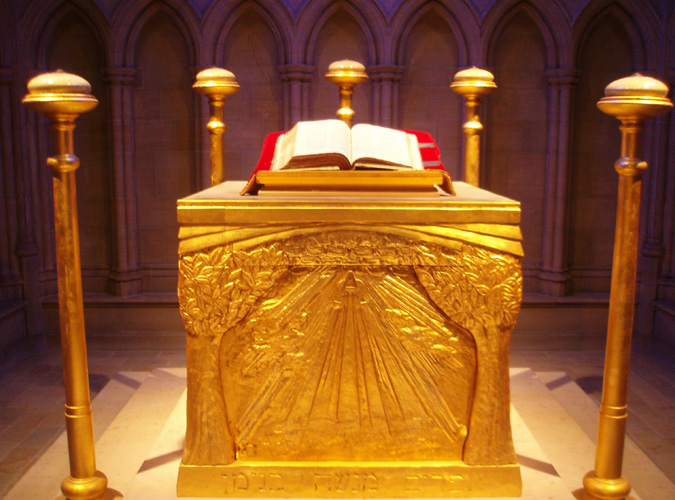
wordonaltaroct09.jpgAt worship services in Bryn Athyn Cathedral in Bryn Athyn, Pennsylvania, the visual focus of the congregation is a large copy of the Word on the altar in the sanctuary. On sunny mornings the Word is bathed in a soft violet light created by stained glass windows on either side of the altar. Additional light is provided by seven golden lampstands. Although Bryn Athyn Cathedral’s copy of the Word has been the focus of services since the building’s dedication in 1919, many are not familiar with its interesting history, which dates back to the sixteenth century.

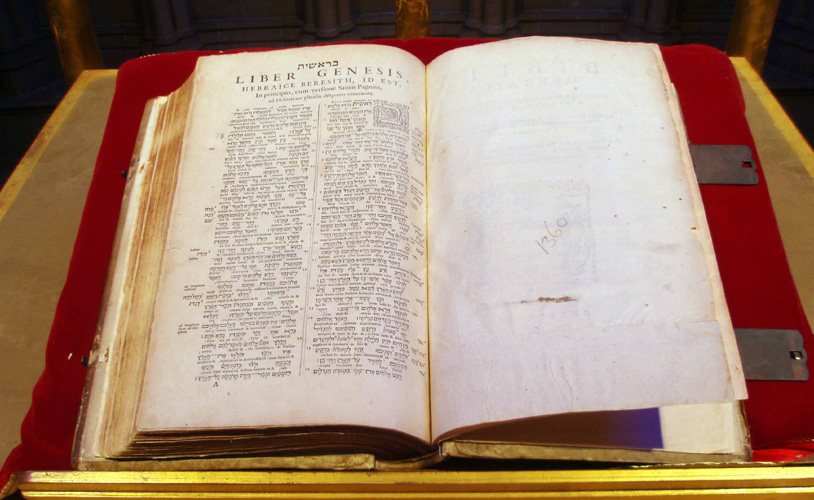
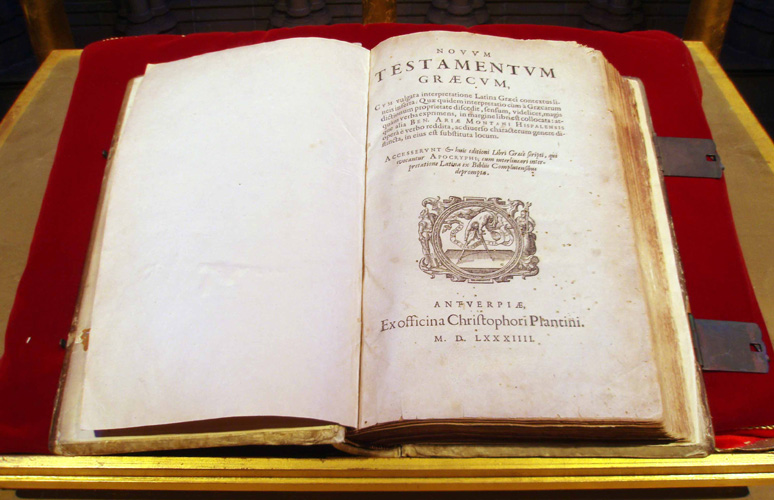
genesisoct09.jpgnewtestoct09.jpgThe text was printed by Christophe Plantin, a well-known Renaissance printer and publisher, in Antwerp in 1584. It was originally part of the Academy of the New Church library collection, and is now on permanent loan to the Cathedral from the Swedenborg Library, Bryn Athyn, PA. Plantin’s Bible is interlinear, with Hebrew and Latin occurring together in the Old Testament, and Greek together with Latin in the New Testament (see photos). Continue reading » » » »

481 New Academy School Buildings (1901-1911)

benadehall.jpg“Visitors to the Bryn Athyn of four months ago would hardly recognize the present perspective and those who knew our institution in Friedlander street, Philadelphia, will rub their eyes and wonder if this is, indeed, the same old ‘Academy’” (Editor, New Church Life 1904, 569).

Those individuals who have recently visited the new buildings on the campus of Bryn Athyn College, in Bryn Athyn, Pennsylvania, may find that the above sentiment, expressed over a hundred years ago, speaks equally well to the present day.

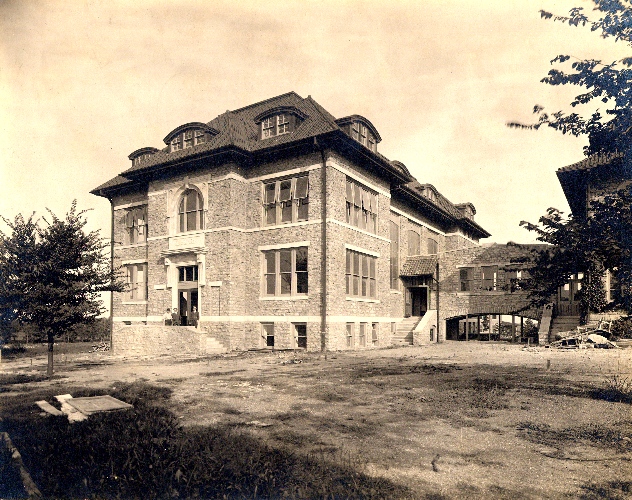
library.jpgIn 1901, a new building was erected for the Academy of the New Church College and Secondary Schools (see photo, top) on land that is now occupied exclusively by the Academy Secondary Schools. It would eventually be given the name Benade Hall (1910), in honor of the Rev. William Henry Benade.  A dormitory for girls, Glenn Hall, was built the same year, but was occupied by the boys until 1904 when their own dormitory, Stuart Hall, was constructed. The dining hall and heating plant were also built in 1904. In 1909 work began on the combined library and museum building (now the Fine Arts Building, see photo, left), and the elementary school (De Charms Hall, now part of the Secondary Schools). Continue reading » » » »

475 Fun Facts Worth a Second Look

From time to time new photographs surface following the publication of a New Church History Fun Fact. Each Fun Fact is researched and written within a very limited time frame, making it likely that new materials will come to light at a later date. In fact, one of the most exciting aspects of this project is the additional information we periodically receive from our readers.

Every Fun Fact sent to our subscribers via email also exists permanently on the NewChurchHistory.org website, where the material can be continuously updated. We are pleased to provide links to three previous Fun Facts that have recently had striking new photographs added.


decennialhotelsecondlook.jpg  Tenth Anniversary Celebration of the Academy of the New Church at Seaside Resort (1886)


swedenborghousereplicasecondlook.jpg  Replica of Swedenborg House at St. Louis World Fair (1904)


bronzebustsecondlook.jpg  Bronze Bust of Swedenborg Disappears from Lincoln Park, Chicago; Police Baffled (1976)


The editors of NewChurchHistory.org would like to thank Marvin B. Clymer, Academy of the New Church Archives, Bryn Athyn, PA, for locating and scanning the new material. Photo credits for the photographs in this New Church History Fun Fact can be found at the end of each of the three Fun Facts listed.

Questions and comments may be addressed to the editors at info@newchurchhistory.org.

457 The Rules of Life

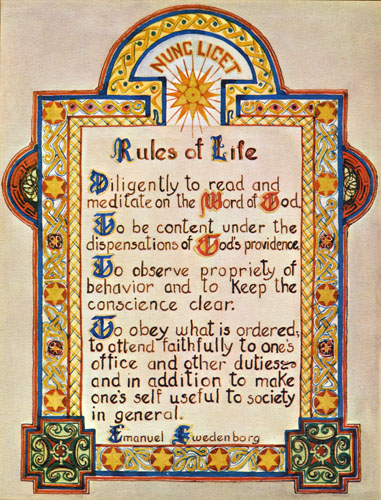
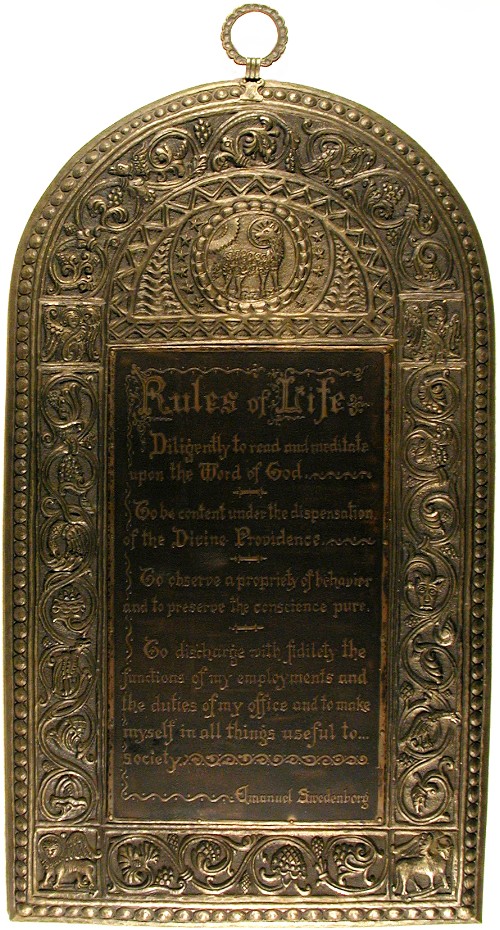
rulesoflifestar.jpgIsaac Pitman (1813-1897), knighted by Queen Victoria in 1894, is famous for having developed a widely used form of shorthand, now referred to as Pitman shorthand.  In 1837 he published a small pamphlet on the subject titled Stenographic Sound-hand. Of interest to our readers is the fact that one of the texts he chose to use as an illustration of his shorthand method was Emanuel Swedenborg’s “Rules of Life.” Pitman, a member of the New Church in England, was very active in the dissemination of Swedenborg’s theological works.

rulesoflifemonel.jpgSwedenborg’s Rules of Life have been used by various New Church organizations since at least the mid-nineteenth century. Although they have been attributed to Swedenborg, no actual document containing them has ever been found among Swedenborg’s books and papers. The sole reference for the Rules is in the text of a eulogy for Swedenborg delivered by Samuel Sandels. In his address, Sandels states that he had found the Rules of Life among Swedenborg’s manuscripts, and proceeds to list them.*  The translated Rules are as follows (although it must be noted that slight variations exist between different translations): Continue reading » » » »

454 Swedenborg Bust by Preston Powers (1879)

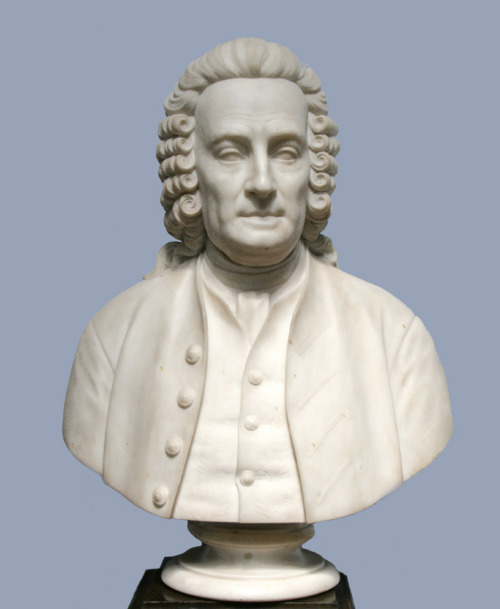
ssswedenborgbustjuly09.jpgAccording to Jonathan Bayley, Hiram Powers (1805-1873), the most famous American sculptor of the nineteenth century, “spoke of his great wish to do a statue of Swedenborg, which he wanted to make somewhat worthy of its subject. At different times of his life he returned to this idea, but something occurred again and again causing it to be deferred.

“Fully aware of his father’s wishes and ideas, at last this wish was carried out by Mr. Preston Powers, so far as the beautiful and noble bust is concerned, which now stands in the Swedenborg Society’s large room” (Jonathan Bayley, New Church Worthies or Early but Little-known Disciples of the Lord in Diffusing the Truths of the New Church, 1884).

In 1865, Dr. John Spurgin, President of The Swedenborg Society, London, had written to Hiram Powers to see if he would be interested in executing a statue of Swedenborg. The Society had proposed the idea of having a statue of Swedenborg placed in some prominent place in order to increase public awareness of his name, and encourage further investigation into his works. In response to Spurgin’s letter, Powers expressed his willingness to undertake the project, indicating that it would take him about two years to complete. Continue reading » » » »

449 Up and Down the Nile: The Beginning of a New Church Museum (1878)

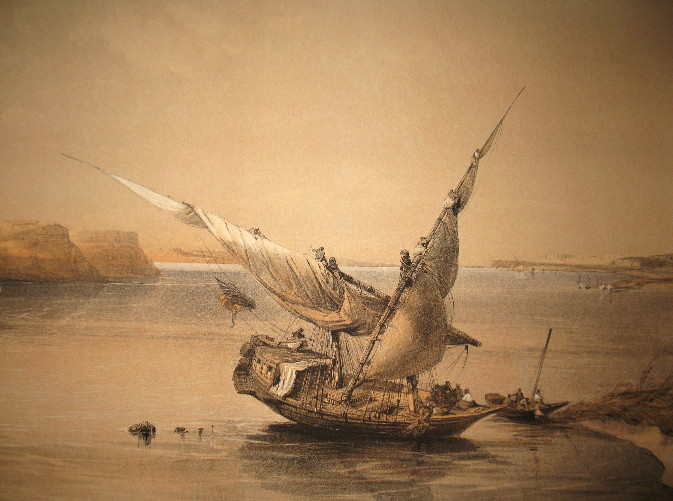
dahabiyahjune09.jpgIn the winter of 1878, the Rev. William H. Benade (1816-1905 ) and John Pitcairn (1841-1916) were traveling in Egypt, one stop on an extended tour they had begun the previous June. Their purpose was to visit Europe, Egypt, and the Holy Land, spreading word about the New Church and the newly formed Academy of the New Church in Philadelphia. In Egypt they spent three months on the Nile traveling in a dahabiyah, the traditional Egyptian houseboat (see photo, top). Their boat, the Sylvia, left Cairo on January 10, 1878, traveling as far south as Abu Simbel.

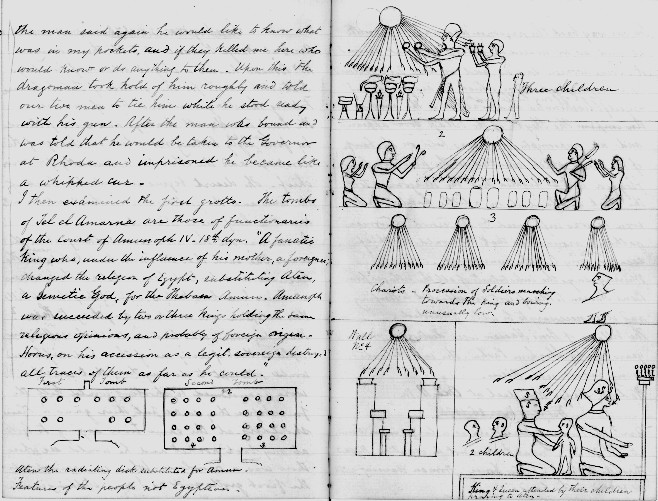
diaryamarnajune09.jpgOne unexpected result of this tour was the beginning of the Academy’s museum. An entry in Pitcairn’s diary illustrates their gradual introduction to the antiquities market in Egypt:

“Arrd. Luxor 9 O’c. this morning . . . Called and paid our respects to the Am[erican] Consul an Egyptian named Ali Effendi Abu Murad. Long shebooks, coffee. Invited him to dine with us tomorrow evening. Purchased some Antiquities. This is the principal place for the manufacturing of antiquities. We are beginning to be able to judge between the genuine and the immitation [sic] . . . A great many vendors of Antiquities ply their avocation here. One of them took us to his house to show us a sitting figure, about a foot high for which he asked ₤30 Also a Roman head cut out of basalt . . . When we arrived at his house he gave a signal to the women who all disappeared, according to the custom. We were then ushered in to a house better than the average. The outside mud walls had no windows but we first came into a small court or yard where there were tame pigeons and two children playing. We were then conducted up stairs to a sort of portico or verandah where we were asked to be seated, a rug was placed on the mud floor and the Antiquities were placed before us” (John Pitcairn. Diary entry. 7 March 1878. Academy of the New Church Archives, Swedenborg Library, Bryn Athyn, PA). Continue reading » » » »

444 The Academy Collection of Swedenborg Documents (Green Books) Available Online

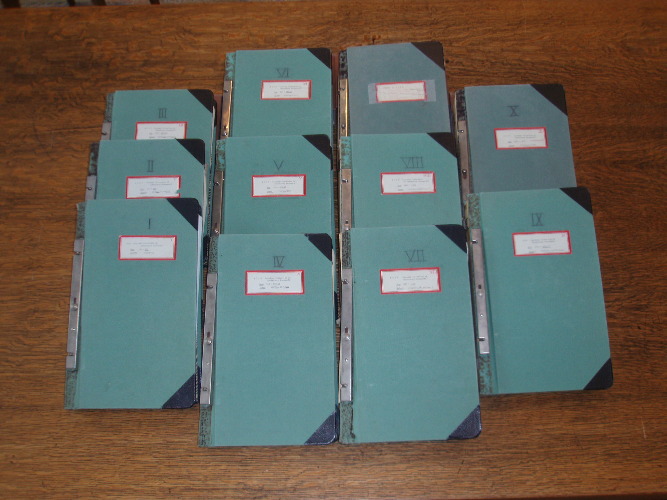
greenbooksapril09.jpgThe question of what to do with Emanuel Swedenborg’s possessions arose shortly after his death in 1772. “In London, where he had been living, his signet ring and some other valuables were gathered up and sent along with some papers and clothing back to Sweden in case any of his relatives wanted them. The remaining items were given to various friends. A bundle of letters to Swedenborg from Voltaire, Rousseau and others was not considered worth saving and was tossed into the fire! When the box of Swedenborg’s effects arrived in Stockholm two of his heirs, who were bishops in the Swedish Church, tried to have his papers burned as trash” (Marvin B. Clymer, “Academy Collection of Swedenborg Documents,” New Church Life 2009, 18). The Swedenborg family subsequently made the decision to donate his manuscripts, diaries, and papers to the Royal Swedish Academy of Sciences. Soon afterwards, members of the New Church began to study and organize the material held by the Academy of Sciences and to seek out additional materials that had not yet been found. By the beginning of the twentieth century, a great deal of work still remained to be done.

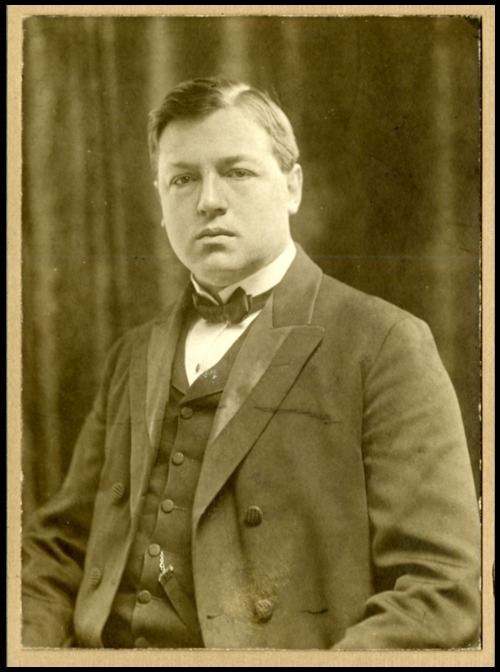
alfredstrohapril09.jpgIn 1902, Alfred H. Stroh (see photo, left), who had recently received a Bachelor of Theology from the Academy of the New Church in Bryn Athyn, PA, was sent to Sweden to oversee the copying of several of Swedenborg’s unpublished scientific manuscripts, as well as a phototype of part of the Spiritual Diary (see New Church Life 1902, 657). Stroh began to find other unknown Swedenborg documents, and quickly became devoted to researching and publishing Swedenborgiana. Continue reading » » » »

439 Swedenborgiana and Gifts from Heaven

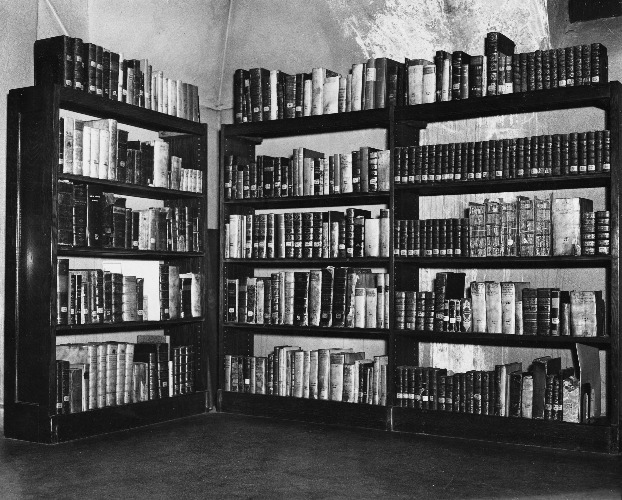
oldlibraryapril09.jpgOliver Wendell Holmes wrote that “every library should try to be complete on something, if it were only on the history of pin-heads.” From the beginning, the Academy of the New Church Library (now the Swedenborg Library) has made the effort to be as complete as possible in the area of Swedenborgiana. Rev. W. Cairns Henderson once defined Swedenborgiana as “the Writings, in print and in reproduction of the mss.; Swedenborg’s own works in the same two forms; books used by him, documents concerning Swedenborg and literary material relating to him; New Church collateral literature, both books and pamphlets; and New Church periodicals” (New Church Life 1957, 20). Room 17 on the fourth floor of the old library (now the Fine Arts building) housed part of the Swedenborgiana Collection for many years.

room17april09.jpgRoom 17 (see historic photo, left) contained books known to have been owned by Swedenborg and books quoted from or referred to by Swedenborg, as well as translations of these works. This collection also included contemporary books that mentioned Swedenborg or his work.

“It was in 1890 that particular attention began to be paid to the preservation of original editions of Swedenborg, to the photolithographing of the mss., and to the collecting of New Church collateral literature. Continue reading » » » »

433 Painting with Light: The Revival of Medieval Glassmaking in Bryn Athyn (2009)

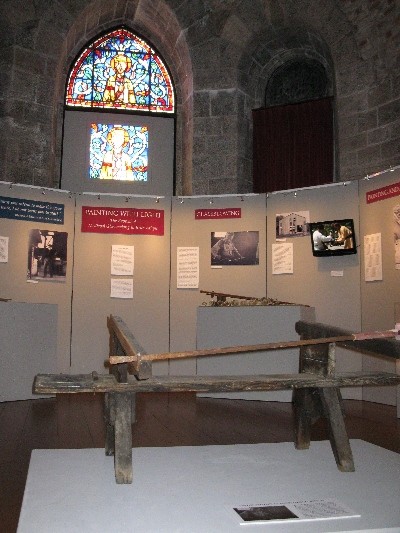
exhibitmar09.jpgGlencairn Museum’s new exhibition, “Painting with Light: The Revival of Medieval Glassmaking in Bryn Athyn” (open through July 25th, 2009) is organized into the following sections: “Tracing and Design,” “Finding the Color,” ”Glassblowing,” “Painting and Assembly,” and “The King Window.” The exhibition features a number of original windows, as well as glassmaking tools and equipment, including a glassblowing bench used in the Bryn Athyn glass factory (which closed in 1942 due to World War Two). 

hyattmar09.jpgThe rich colors and exquisite composition of the stained glass windows made for Bryn Athyn Cathedral and Glencairn, beginning in the 1920s, have been inspiring worshipers and visitors for decades. “Painting with Light” tells the story of the artists and craftsmen who set out to recreate the splendor of the stained glass made for Gothic cathedrals by reviving the lost techniques of the medieval glassmakers. Continue reading » » » »

432 Tabernacle Model at Glencairn Museum (1921)

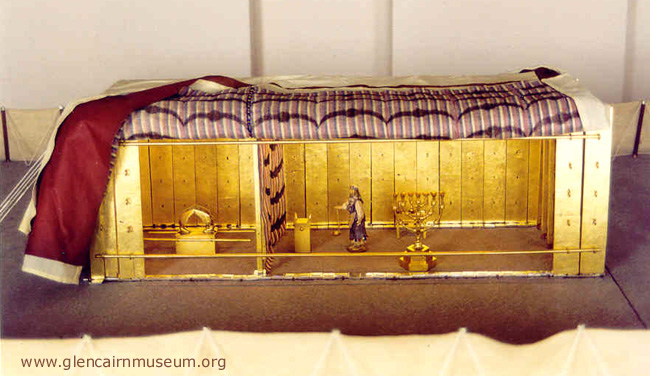
tabernaclefeb09.jpgA central feature of Glencairn Museum’s Ancient Near East Gallery is a scale model of the Tabernacle of Israel. Built over a ten-year period, beginning in 1921, this model was an ambitious educational project designed for the benefit of, and with the help of, the children at Bryn Athyn Church School, in Bryn Athyn, Pennsylvania. The Tabernacle project was conceived of and directed by the Rev. George de Charms, whose book, The Tabernacle of Israel (1969), describes in detail the building of the model and the religious significance of the Tabernacle.
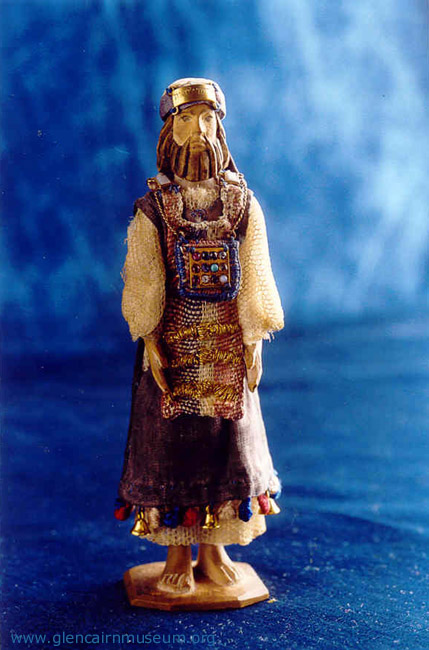
highpriestfeb09.jpgThe Tabernacle model was crafted through the efforts of the entire elementary school in Bryn Athyn. The children were first prepared with a yearlong series of special worship services, during which they learned about the Tabernacle’s structure and significance. At these services the children were asked to bring one piece of precious jewelry each, as a donation from their families to help fund the project. This event was intended to reenact the donations given by the Israelite families during the construction of the original Tabernacle (Exodus 35:20-29). The children’s donations, together with an initial contribution of $15, were enough to pay for the materials, including the gold, silver and brass metalwork. (The total cost was calculated to be around $1,500.) In later years, one participant recalled with humor the frustration she felt as a little girl at having to give up her favorite silver spoon for the project. Continue reading » » » »

423 Summerhouse of Emanuel Swedenborg

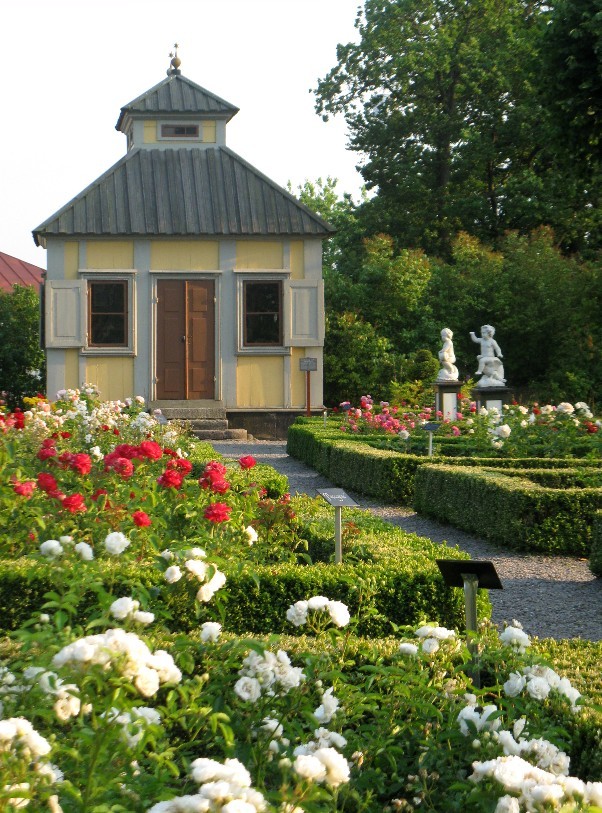
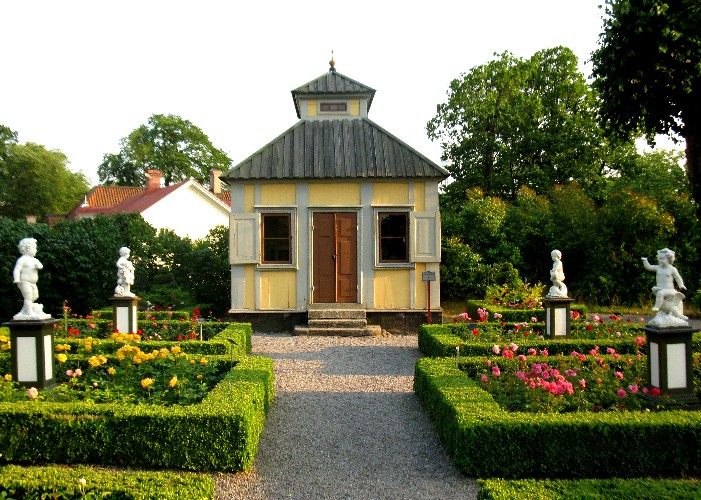
mullersummerhousejan09.jpgAccording to the Rev. Nicholas Collin of Philadelphia, who visited Emanuel Swedenborg at his home in 1766, the charming summerhouse (Swedish lusthus) in his garden was “a kind of temple, to which he often retired for contemplation.” The summerhouse, which has been preserved and can be visited by the general public, has retained a special allure for those interested in Swedenborg’s theological writings. (For the quotation see R.L. Tafel, 1877, Documents Concerning the Life and Character of Emanuel Swedenborg, Vol. 2, part 1, p. 423.)

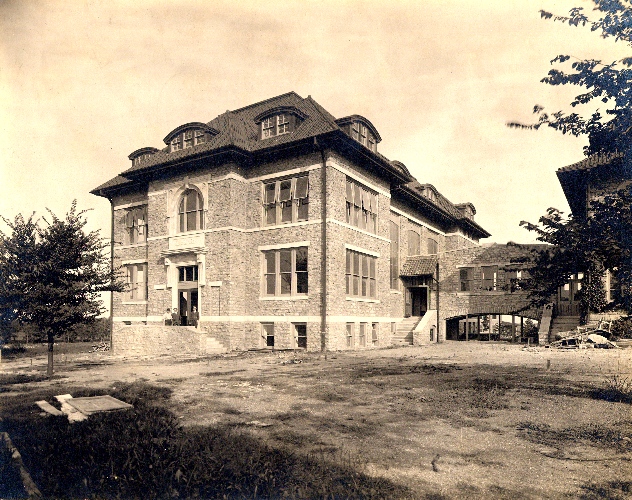
The property (see diagram) on which the summerhouse originally stood was purchased by Swedenborg in 1743 and remained in his possession until his death in 1772. It was situated in southern Stockholm on Hornsgatan, near Lake Malaren. Swedenborg’s summerhouse stood at the far end of his property and could be reached from his house by a path leading through the garden. During Swedenborg’s time the summerhouse was connected to two other structures on either side—a garden shed to the north, and his library to the south. The exterior of the house was painted yellow, a typical Swedish color, with vertical boards in a contrasting color providing a visual accent to the structure’s exterior. A visitor in the 1860s described the colors as “dark red lines [presumably the vertical boards] on yellow ground, with white window frames and a black roof . . .” (see the online article Swedenborg’s Property). Continue reading » » » »

419 Do You Know the Academy Whistle?

academywhistle1.gif“It has been suggested by someone that ‘our boys’ make good use of the ‘Academy whistle,’ especially when they arrive in England and France. It will be sure to receive an answer from any Academy friend within earshot” (New Church Life 1917, 770).

The Academy of the New Church whistle, a simple tune that originated in the 1890s, was promoted in the pages of New Church Life during the First World War as a means for men and women in the service to recognize each other in a crowd.

“Our soldier readers will be interested in the news that Miss Helen Colley, of Bryn Athyn, is now in France. She is a member of the entertainment branch of the Y. M. C. A., and will travel from place to place through France. She is anxious to meet the New Church soldiers. For the information of those who have never seen Miss Colley, she asks us to say that her picture will be on the program posted in the Y. M. C. A. huts in which she will appear. We might suggest that the ‘Academy Whistle’ will always bring quick response” (”The Academy War Service Committee,” New Church Life 1918, 704). Continue reading » » » »

418 Christmas Lamp in Glencairn Chapel (1930s or 40s)

lampdec08.jpgThe chapel in Glencairn Museum, Bryn Athyn, Pennsylvania, has a floor lamp with a unique handcrafted lampshade depicting the Christmas story (11.OP.02). The six-paneled shade was commissioned by Raymond Pitcairn in the late 1930s or early 1940s when Glencairn was being decorated, and was designed and painted by Francis (”Frank”) Eugene Snyder (1908-1995). It is made of plexiglas panels, which Synder painted with oils, using a variety of media to achieve the appearance and texture of stained glass when the light is turned on. All six panels are shown here with accompanying quotations. Continue reading » » » »

407 William Henry Benade as Moravian Teacher and Minister (1835-1844)

benade121308.jpgBishop William Henry Benade, who was destined to become one of the most effective advocates for New Church education, did not grow up in a New Church family. Born in 1816 in Lancaster County, Pennsylvania, William came from a family that was prominent in the Moravian Church.

reinkesmall.jpgWilliam’s father, Andrew Benade, had left Europe in 1795 to teach at Nazareth Hall, a prominent boarding school for boys in the Moravian community at Nazareth, Pennsylvania (see lithograph and photo, left and below). Andrew was later principal of the Moravian Seminary for Young Ladies in nearby Bethlehem, a position he held for twelve years. In 1822 he was consecrated a bishop in the Moravian Church. William, as the son of a Moravian teacher, school administrator, and bishop, was raised in a family that placed a high value on the concept of religious education. Continue reading » » » »

396 Thanksgiving Feast in Chicago (1883)

pilgrimfeast.jpg“Chicago, Ill., West Side - Though it is a little late, perhaps it will be interesting to your readers to know how we celebrated Thanksgiving Day here. The Pastor thinking that it would be useful to have a fall festival, concluded that we could not do better than adopt Thanksgiving Day. So it was decided to have a general Thanksgiving dinner at the church, to which all were invited. Accordingly when Thanksgiving Day arrived, about sixty members of the congregation assembled at the church, and set down to a dinner of cold turkey, hot vegetables, coffee, pie, etc., which was provided by the ladies. The tables were arranged so that they formed three sides of a square, and we were assigned our seats by slips of paper on which our names were written. When all were seated the Pastor asked the blessing of the Lord upon our feast, and then we began the discussion of the good things. After the first ardor had a little worn off, our Pastor, the Rev. Mr. [W.F.] Pendleton, made a few remarks about the day and the use of being thankful, i.e., of acknowledging that all that we have comes from the Lord. . . . Continue reading » » » »

389 The Bryn Athyn Glass Factory (1922-1942)

davidsmithnov08.jpg“One of the things that I remember is going over to the glass factory and watching the operation going on there, particularly watching David Smith, the glassblower, sit on that bench and actually be blowing glass. And I remember one occasion where I thought that I could do it myself, and so he handed me the blowpipe with some glass on the end, and I puffed as hard as I could—nothing happened. I didn’t make any bubble at all at the end of the pipe” (Carl R. Gunther, son of Ariel Gunther. Interview. March 30, 2006).

glassfactoryleftnov08.jpgDuring the early 1920s, when much of the construction for Bryn Athyn Cathedral had been completed, the builders began to turn their attention to the production of stained glass windows. Continue reading » » » »

384 Anatomy Room at Wallace Street School, Philadelphia (1891)

anatomyroomwallacest.jpg“One night in 1891, when the schools were located at 1821 Wallace St, a burglar broke into the building and collected quite a loot.

“Coming into the Anatomy room, he suddenly beheld the [anatomical] manikin and was so frightened at its dreadful appearance that he dropped his bundle and quickly made his way over the roofs of the adjoining buildings” (C. Th. Odhner, “John Pitcairn: A Biography,” New Church Life 1917, 291).

anatomyroom6.jpgThe manikin that caused such distress for the burglar in 1891 has been used to teach anatomy at the Academy of the New Church since the school was founded in 1877. Continue reading » » » »

Copyright © The Academy of the New Church
E-Mail: ed.gyllenhaal@glencairnmuseum.org

This page is powered by WordPress and is based on the Hiperminimalist Theme design by Borja Fernandez and adapted by Amos Glenn.
Entries and comments feeds.