354 First Academy School Opening (1877)

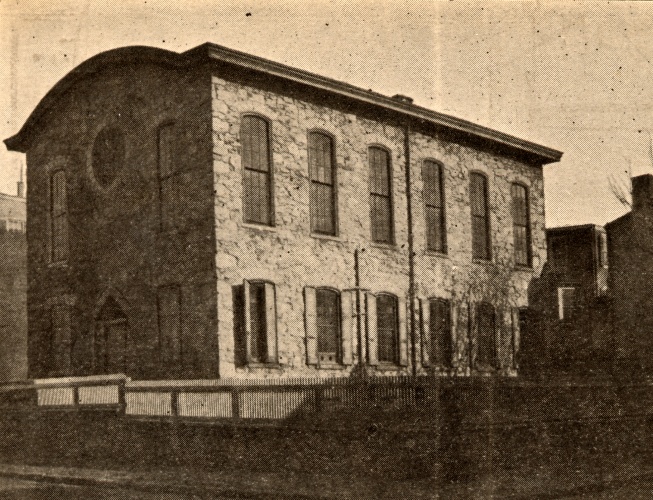
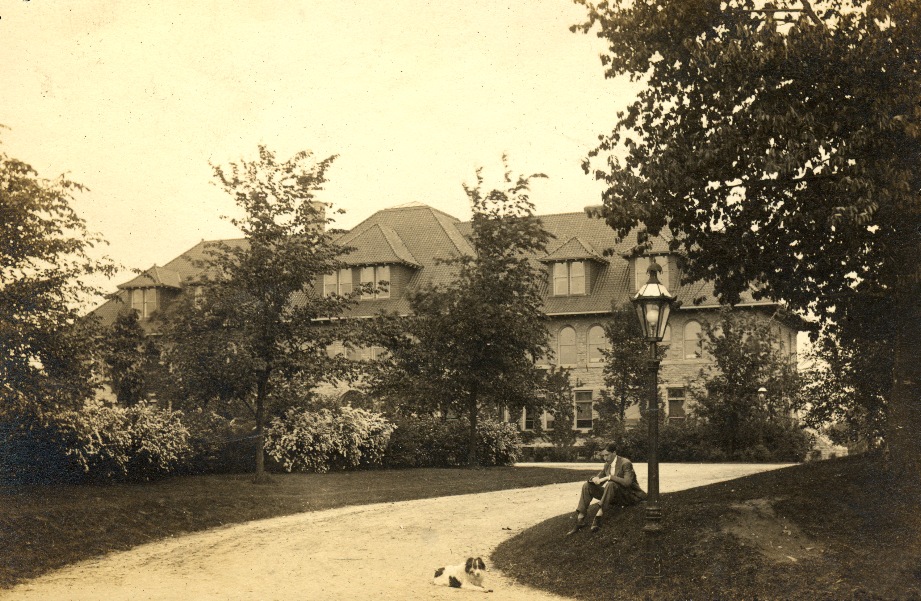
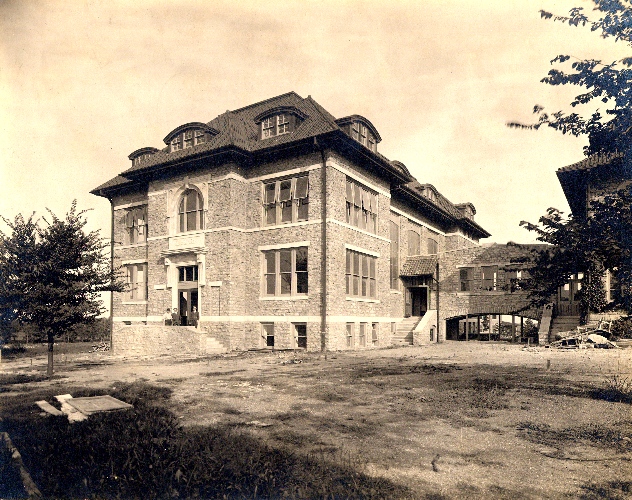
1889classaugust08.jpgAs Bryn Athyn College of the New Church students return to classes in 2008, they are being met by giant mounds of earth and the sounds of heavy construction, part of an extensive growth plan for the campus. As they pass by the College’s entrance signs they may have noticed a small phrase below the school’s name: “established 1877.” The official opening of the first school of the Academy of the New Church took place on Monday, September 3, 1877.

cherrystreetaugust08.jpgThe first school was on the lower floor of the church building on Cherry Street in Philadelphia (see photo, left), which at that time was being used by the newly formed Advent Society. Continue reading » » » »

349 New Church Sculptor John Flaxman: Deliver Us from Evil

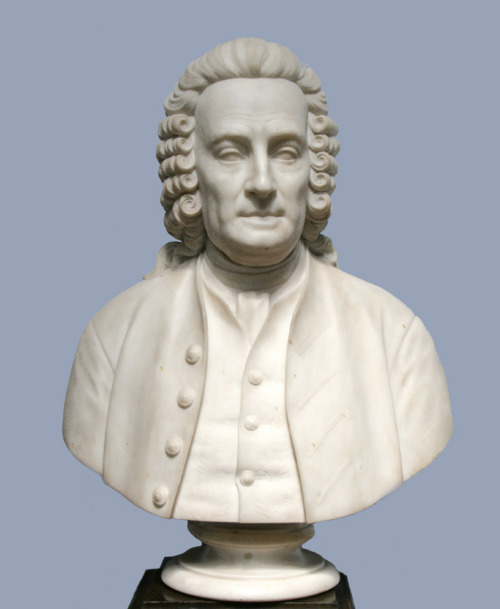
deliverusaugust8.jpgThe mind of the noted British sculptor John Flaxman (1755-1826) “was earnest, enthusiastic, and highly poetic; his temper serene; his affections warm and benevolent; and his whole character shone with the angelic light of pure disinterestedness and cheerful piety. Religion was not with him a thing set apart for occasional use, regarded only for the sake of the world’s opinions, or because the world has lost its attractions; it was the vivifying principle of his existence; it guided every feeling, was blended with every thought, and passed into every action. In this dishonest, hypocritical world, a simple-minded, sincere man must necessarily be considered very peculiar; and John Flaxman was so regarded. He was a receiver of the Doctrines of the New Jerusalem, a humble believer that the revelations of Emanuel Swedenborg were graciously provided by the Lord, for the restoration of a true faith and church in the world” Continue reading » » » »

343 Seal of the General Church of the New Jerusalem

gcsealglencairnjuly8.jpgDaily life exposes us to a stream of familiar advertising images: McDonald’s golden arches, Starbucks’ mermaid, the Prudential rock, etc. These commercial symbols are designed to create “brand recognition” for the companies they represent. Religious organizations also adopt logos and attempt to create a certain brand identity, but for a very different purpose. The logos, seals and emblems of religious bodies are meant to convey a sense of the spiritual truths they believe in. The General Church of the New Jerusalem, headquartered in Bryn Athyn, Pennsylvania, developed their seal in the early 1900s.

gcmemthumbjuly8.jpgThe design for the earliest form of the General Church seal was inspired by these words: “Then I turned to see the voice that spoke with me. And having turned I saw seven golden lampstands, and in the midst of the seven lampstands One like the Son of Man. . . . He had in His right hand seven stars . . .” (Rev. 1:12-13, 16). Continue reading » » » »

335 New Church Worthies (Now Online)

hirampowersjune8.jpgThe history of the establishment of New Church groups in the eighteenth and nineteenth centuries is, at heart, the story of individuals. New Church people have always been interested in the personal stories of men and women who, for a wide variety of reasons, were readers of the works of Emanuel Swedenborg, and who subsequently accepted them as Divine revelation from God. New Church Worthies, published in England in 1884, is now available online at NewChurchHistory.org. This book contains thirty-three biographical sketches of early New Church people, each one with a unique personal story. A sampling of just three of these individuals follows below: Continue reading » » » »

329 New Church Day (June 19, 1770)

chapelwindowface.jpgThe nineteenth day of June, 1770, is the most significant date in the history of the New Church. It was on this day that the Lord called together the twelve disciples who had followed Him on earth, instructed them in the Heavenly Doctrine of the New Jerusalem, and sent them out to teach that “the Lord God Jesus Christ reigns, whose kingdom shall be for ages and ages.” This was the beginning of the New Christian Church. It is often referred to as the “birthday” of the New Church, or simply “New Church Day.”

This date was originally revealed in 1771, with the publication of the book True Christian Religion, by Emanuel Swedenborg. The importance of the date has been recognized since the origin of New Church groups. Continue reading » » » »

323 Swedenborg Medal Issued by the Swedish Academy (1858)

medal5-30c.jpgOn one side of a small medal, a man in Roman dress stops beside a sheer rock face, bearing a lighted torch in his right hand.


medal5-30a.jpgAbove him is the Latin phrase “Quaerenti Defuit Orbis” (To the seeker, the world was found lacking). And below his feet: “Arcana Velo Sublato Adspexit Vates” (With the veil lifted the seer gazed upon mysteries). Underneath this is “MDCCLXXII” (1772, the date of Swedenborg’s death). Continue reading » » » »

313 The Society for Faith and Charity (1796-1830)

book.JPGThe minutes of the Society for Faith and Charity (a Swedish organization active from 1796 to 1830) are “a perfect gold mine, a big package of New Church History . . . The Society received money from England for the publication of the Writings, and there was for a time a lively correspondence which will produce bibliographical information of much interest. The matrikel (catalogue of members), handsomely bound in now faded silk, contains not only the names of members, in many cases in autograph, but also many dates and shows precisely how the movement was spreading” (Alfred H. Stroh. Letter quoted in New Church Life 1911, 404).

odhnertombstone.jpgpehrodhner.jpgThe Societas Pro Fide et Charitate was organized in 1796, chiefly for the purpose of publishing Swedenborg’s works in Sweden. The existence of the Society was kept secret because of Swedish persecution against New Church ideas Continue reading » » » »

308 Alnwick Grove Park

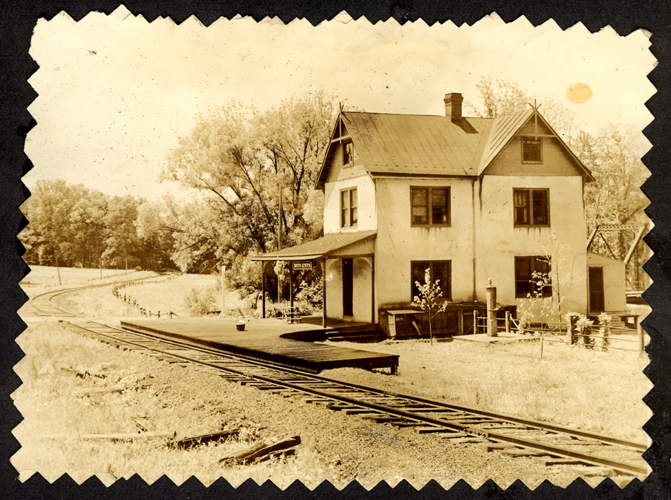
alnwickgrove.jpg“I can remember that there was a good sized round pavilion for dancing, picnic tables, and one or two other buildings not as large as the round pavilion. The latter, I think was up the hill above the railroad, and the others were down nearer the Creek. Before my day I know that the young people of our Church came out from Philadelphia on the train for picnics. That was before any of us moved out here. The station was then called Alnwick Grove, but there were not many trains” (Freda Pendleton. Letter to Sylvia M. Fesmire. 14 January 1949. Academy of the New Church Archives, Swedenborg Library, Bryn Athyn, PA).

canoeingthumb.jpgAlnwick Grove, a park along the Pennypack Creek just south of what is now the Bryn Athyn Post Office, between the stations then known as Alnwick Grove and Huntingdon Valley, was an early destination for members of the Advent Society in Philadelphia. Excursions occurred long before the Society’s formal decision to relocate to the area in 1893: “On June 19th [1880] the Academy held its third annual celebration in the picnic grounds near Alnwick Grove . . .” Continue reading » » » »

300 The New Church History Image Project (Online)

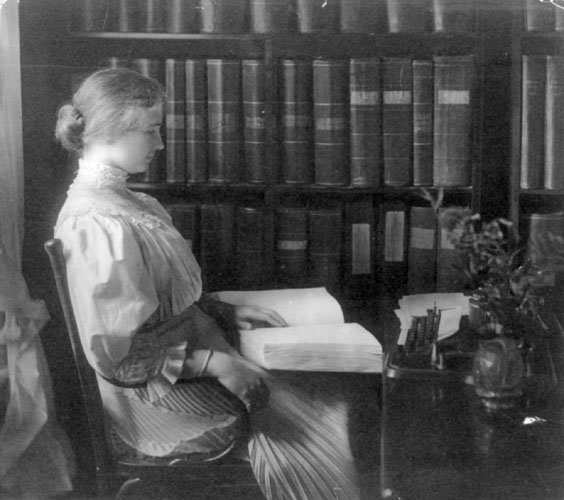
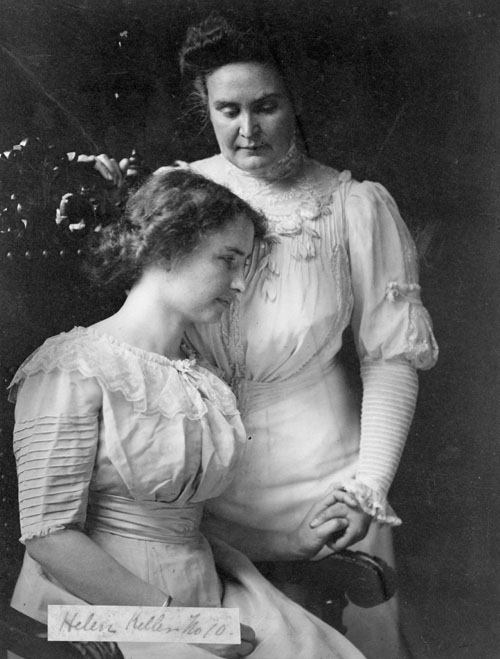
cathedralarch.jpgThe amount of news coverage given to the recent discovery of a childhood photograph of Helen Keller, and a potentially “new” photograph of Abraham Lincoln at Gettysburg, speaks to the power of historic images. NewChurchHistory.org has a large collection of historic photographs available online for those who visit the Web site. The New Church History Image Project currently has photographs organized into five albums, with a limitless capacity for the addition of future albums. Work is now in progress on a new album: “Early New Church Places of Worship.” Continue reading » » » »

293 Pageant Depicting the Story of Joseph (1930)

pharaohthumb.jpg“Yes, the schools are at work on the production of a pageant, the story of Joseph. It is the same one that was given two years ago, but this time we are getting it up particularly for the Assembly. Step into the gym, if you are on the Campus, and see the work that is being done—clothes lines hung with dyed costumes, sewing machines humming, and anthropoids working with coils of wire and big lamps. Painted properties stand against the wall and the throne of Pharaoh occupies the corner” (Beryl Caldwell, “The Pageant,” The Academy Yearbook, 1930, 9).

ankhsthumb.jpgIn 1930, a pageant depicting The Story of Joseph was presented at an Assembly held by the General Church of the New Jerusalem in Bryn Athyn, Pennsylvania. The recently dedicated Assembly Hall (now the Mitchell Performing Arts Center) Continue reading » » » »

289 New Church Influences on the British Antislavery Movement

insurrection2.jpg“The greater part of [the slaves] were women and children. Notwithstanding this, they had been thrown into the sloop as if they had been articles of lumber, and devoid of feeling. Obliged, moreover, from too close a stowage, to lie on the inequalities and protuberances of the bare planks, without being able to change their position they had in the course of only eight days . . . been very materially hurt; for when I saw them brought out of the sloop, they had several contusions on various parts of their bodies, and in others their flesh was severely cut. A poor child in particular, about two years old, had a very deep wound in his side, made in the manner above stated. He lay afterwards, upon being landed, with the wound contiguous to the ground, so that the sand getting into it, put him to exquisite pain. I mention this instance, only to give an idea of what are thought to be rooms of accommodation for slaves, and of that inhumanity, which naturally springs out of the prosecution of this trade” Continue reading » » » »

283 New School Building in London, England (1892)

michaelc.jpg“The new building which has been erected for the use of the Academy School in London is situated in Brixton, a part of London adjoining Camberwell, about three miles from the ‘City.’ The building faces the west. It is small and compact-looking, built of white brick, and is in a very pleasant neighborhood, with plenty of open space at the back. The basement, which, owing to the nature of the foundation, had to be built half underground, contains two class-rooms, behind which are the janitors apartments. On the upper floor is a large hall, at the east end of which are recesses for the Chancel and Repository. This hall is used for the morning worship and also as a class-room. In addition to this the members of the General Church [of the Advent] worship there every Sunday.

londonschoolthumb.jpgGreat attention has been paid to the furnishing of the building, every convenience being afforded to the teachers and scholars. The church furniture is particularly beautiful, having been designed and executed entirely according to correspondence. In fact, London can now be said to have the finest church furniture in the General Church. It is constructed of the best oak. Continue reading » » » »

275 Early Childhood Memories in Bryn Athyn

vinetchildren.jpg“How did the Bryn Athyn children entertain themselves? They climbed trees for one thing and improvised many little games of their own. There was ‘Pussy wants a Corner,’ jump rope, ‘Tisket-a-Tasket’ and ‘I’m the King of the Castle.’ Baseball was popular which we played in the Acton Field, across the way. . . . 

cowgrazingstream.jpg“We wandered long distances over farm land (which was everywhere then) and well out of Bryn Athyn boundaries. In those days it was safe to stray that far and our parents didn’t seem to be concerned. Continue reading » » » »

270 The Hindi Swedenborg Society (India, 1914)

group in india.jpg“Mr. M. R. Bhatt, writing from Baroda, India, after expressing thanks for a parcel of books and tracts, says: ‘I have since had the good fortune of reading many of the wonderful works of Swedenborg, and I have got them together with all the available works of the venerable Dr. Wilkinson. . . . I am a Brahmin [the highest Indian caste] by birth, but already I am a follower of the Heavenly Doctrine revealed by Swedenborg; and I hope I shall be able in due time even to appropriate his doctrine of the Lord. . . .’ Later the same gentleman wrote: ‘In continuation of my last letter I am happy to inform you that since I sent it our Lord has graciously blessed me with the faith I longed for, and I am made a missionary of the New Church. . . .  Already the new light has been hailed in various quarters with more or less delight. I have been reading the Word and translating Heaven and Hell. My wife follows me in the new faith, my mother and sister alternately hope and fear, and my friends and pupils wish to believe . . .’” (”The Swedenborg Society,” New Church Life 1898, 128).
heartofindia.jpgManishankar Ratnajee Bhatt worked for the spread of Swedenborg’s theological works in India from the 1890s until his death in 1923 (see New Church Life 1924, 61). Bhatt was the first president of the Hindi Swedenborg Society, established in 1914, and oversaw its journal, The Heart of India (see photo, left). He first learned about Swedenborg when he came across a copy of William White’s Life of Swedenborg in a public library in Bombay. He then contacted the Swedenborg Society in London, England, for further reading material, and began a systematic study. When he became convinced of the truth of Swedenborg’s writings, he published a public letter proclaiming his Christian faith and removed from his left shoulder the sacred thread which was the sign of his caste Continue reading » » » »

263 Now Online! Bryn Athyn Cathedral: The Building of a Church

cathedralbook.jpg“I had expected much of the Bryn Athyn church, but nothing like what I found. If it existed in Europe, in France or England, it would still be at once six centuries behind, and a hundred years ahead of its time. But on the soil of great architectural traditions, it would be in a measure comprehensible, and the presence in the neighbourhood of the great works of the past would in a way pre­pare the mind for this achievement of the present age. For your church, alone of modern buildings, in my judgment, is worthy of comparison with the best the Middle Ages produced” (A. Kingsley Porter. Letter to Raymond Pitcairn. 24 October 1917. Glencairn Museum Archives, Bryn Athyn, Pennsylvania. Emphasis added). 

caprintbglennbox18.jpgA. Kingsley Porter (1883-1933), an American art historian and medievalist, expressed this opinion of Bryn Athyn Cathedral in a letter he wrote to Raymond Pitcairn following a visit in 1917. Porter was a Professor of Fine Arts at Yale University at the time, and would later serve with a commission to restore French cathedrals damaged during the First World War. He visited Bryn Athyn on several occasions and carried on a lengthy correspondence with Pitcairn.

Raymond Pitcairn, who oversaw all aspects of the Cathedral’s construction, had hoped to write a book about the project, but a very busy life had not allowed him to devote the necessary time to the task. He eventually commissioned E. Bruce Glenn, a Professor at Bryn Athyn College of the New Church, to take on the project, giving him full access to his personal archive and library. Pitcairn was able to review some of the chapters before his death in 1966. Bryn Athyn Cathedral: The Building of a Church was published in 1971. Continue reading » » » »

259 Happy Founders Day (Two Days Late!)

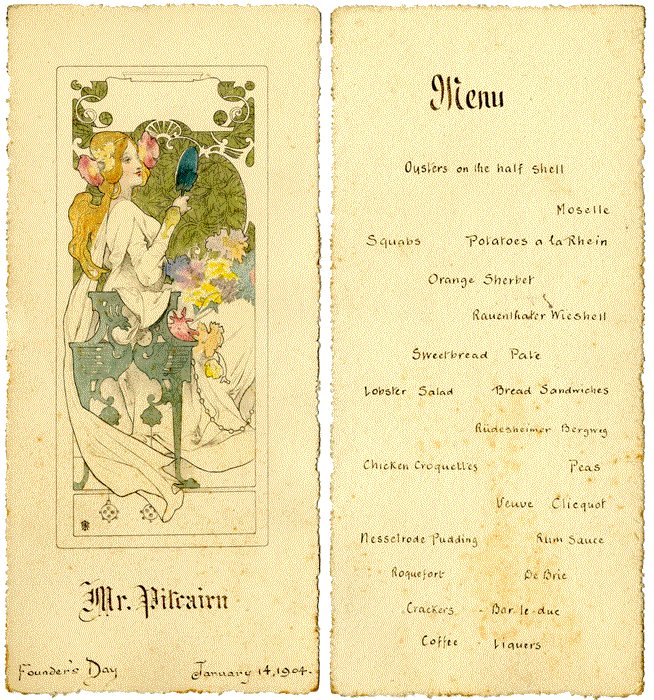
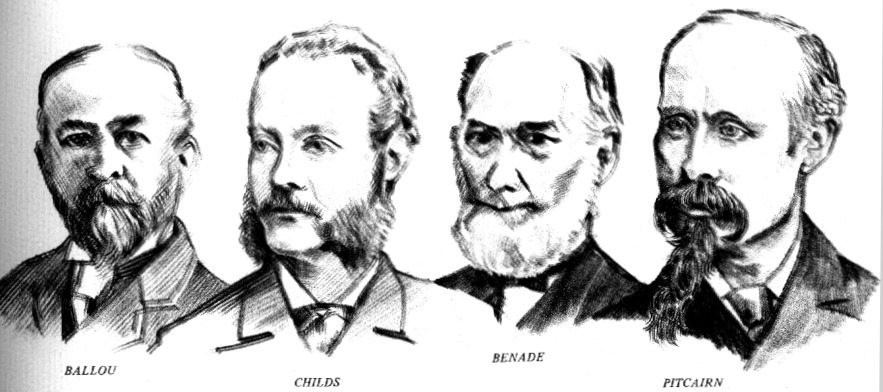
atlanticgarden.jpg“Monday, Jan, 12 [1874]. Mr. Benade, Frank Ballou, Walter C. Childs and myself lunched together today. Organized New Church Club by electing Mr. Benade President, W. C. Childs Secretary, and Frank Ballou Treasurer” (New Church Life 1917, 286).

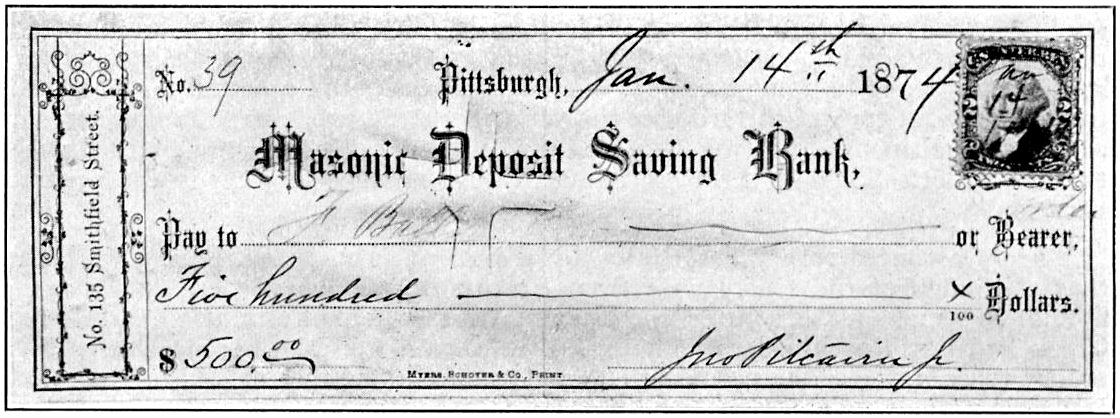
500check.jpgThe lunch described in John Pitcairn’s diary took place in Pittsburgh, Pennsylvania, at the Atlantic Garden restaurant on Diamond Street (see photo above). During their lunchtime conversation, a suggestion was made “that those present form an organization, there and then, in order to begin a propaganda by means of the printed page, for a reformatory movement in the New Church” (New Church Life 1911, 189). In order to defray the cost of their proposed publication, John Pitcairn wrote a check for 500 dollars on January 14th, 1874 (see photo above). Their “New Church Club” formally became the Academy of the New Church on June 19th, 1876, but their historic lunch in 1874 came to be viewed as the true founding date of the Academy.

fourmen.jpgFounders Day was first celebrated twenty years later on January 14th, 1894. This date does not agree with the January 12th date mentioned in Pitcairn’s diary (see excerpt above). The check (written on January 14th) was consulted when the date for the celebration was chosen, in the mistaken belief that it was written on the same day as the meeting at the Atlantic Garden restaurant  (see New Church Life 1894, 39-40). Founders Day was celebrated on the 14th of January rather than the 12th for many years until the mistake was finally discovered in 1917. The diary entry came to light that year when Carl Theophilus Odhner was preparing a biography of John Pitcairn for New Church Life. During his research Odhner also discovered “the curious coincidence that the ‘Atlantic Garden’ restaurant, where the four friends met, was torn down on the very day when John Pitcairn departed from his mortal existence” (New Church Life 1917, 286).

Early Founders Day celebrations took place annually in the dining room of Cairnwood, John and Gertrude Pitcairn’s home in Bryn Athyn. A much larger celebration of Founders Day took place in 1911, when Pitcairn invited 250 people to a supper in the auditorium of De Charms Hall (New Church Life 1911, 187). During the celebration a “large screen curtain was illuminated and the Founders of the Academy were given to our view by the aid of our new stereopticon from slides made especially for the occasion” (New Church Life 1911, 127). (For a list of the slides shown, see this previous New Church History Fun Fact.)

Although the Academy began to celebrate Charter Day in 1917, Founders Day continued to be celebrated on the 12th of January until at least the early 1940s. In 1974, the Academy held a banquet for the corporation and faculty to honor the one hundredth anniversary of Founders Day (New Church Life 1974, 208). 

Photos: The interior of the Altantic Garden restaurant in Pittsburgh has been cropped from a damaged magic lantern slide, and is in the collection of the Academy of the New Church Archives, Swedenborg Library, Bryn Athyn, PA. The photograph of the check is taken from The Academy of the New Church 1876-1926: An Anniversary Record (see link below). The line drawing of the four men present at the restaurant is taken from Toward a New Church University: A Centennial Album, p. 23. 

Further Reading:

The Academy of the New Church 1876-1926: An Anniversary Record

Bryn Athyn and the Academy of the New Church

Questions and comments may be addressed to the editors at info@newchurchhistory.org

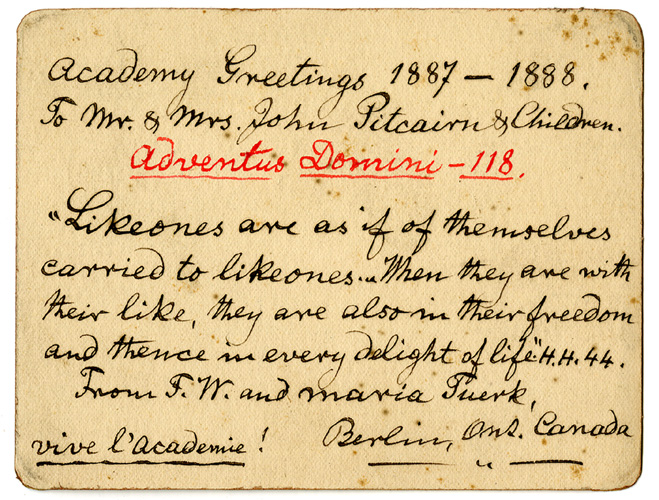
258 Early Academy Christmas and New Year Cards (1885-1892)

cardvaissiere.jpg“Beloved companions, fill glasses with wine,
Vive l’Academie!
And drink to our Union in uses Divine.
Vive l’Academie!” (New Church Life 1911, 202; first stanza of song).

An early Academy of the New Church song, “Vive l’Academie” (long live the Academy), was often sung at Academy gatherings in the 1890s and early 1900s (see New Church Life 1900, 445). This French phrase also appeared on Christmas and New Year cards exchanged between Academy members. Examples of cards containing the phrase appear in a collection of holiday cards Continue reading » » » »

243 Bernice Stroh Sandstrom Nativity Set (c. 1937)

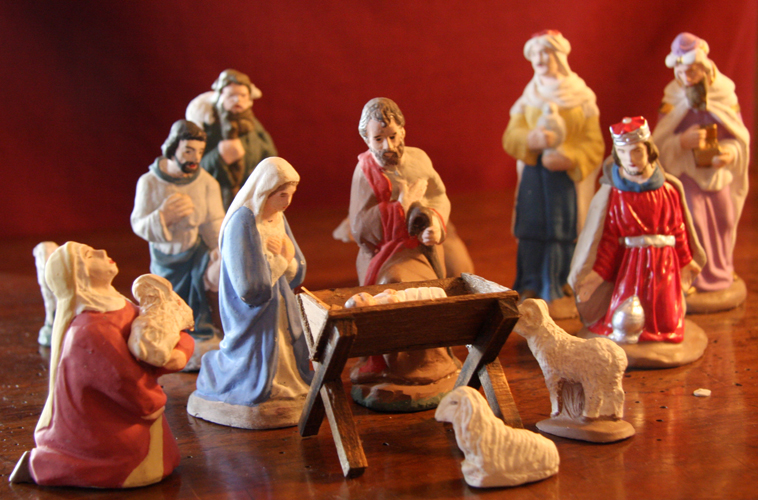
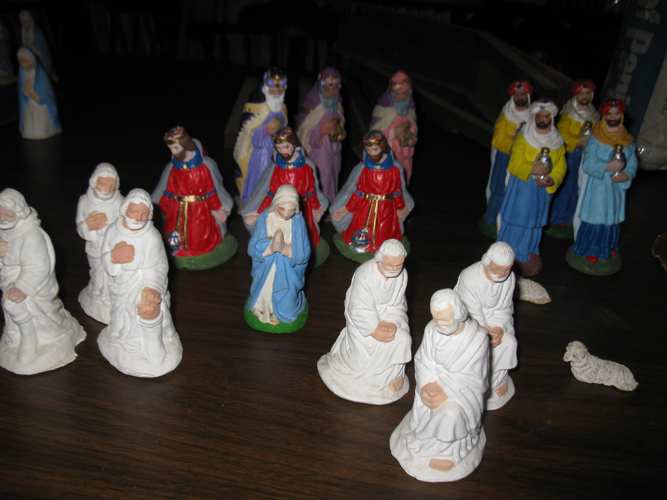
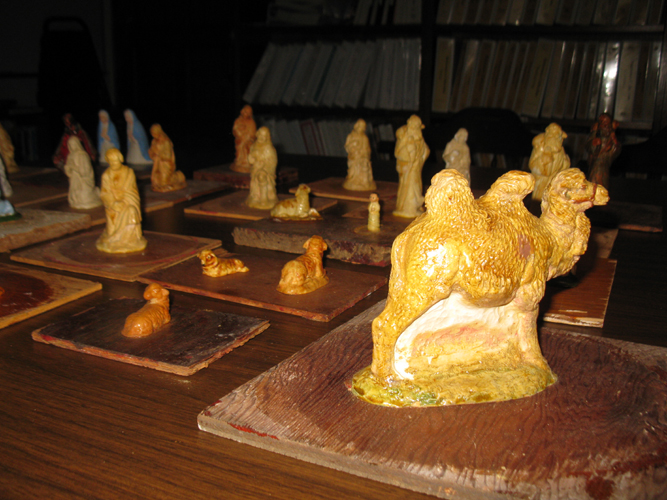
nativitysm1211.jpgThe first Nativity set made by Bernice Stroh Sandstrom (1910-2003) is in the New Church Collection of Glencairn Museum (see photos left and below, 10.XX.566A-I). Donated to the museum by her husband, the Rev. Erik Sandström, the set, consisting of eight handmade figures, was made by Mrs. Sandström for her family around the year 1937.

nativitybig1211.jpgShe went on to make more sets for her family over the years, as well as sets for many other families. These Nativity figures now feature prominently Continue reading » » » »

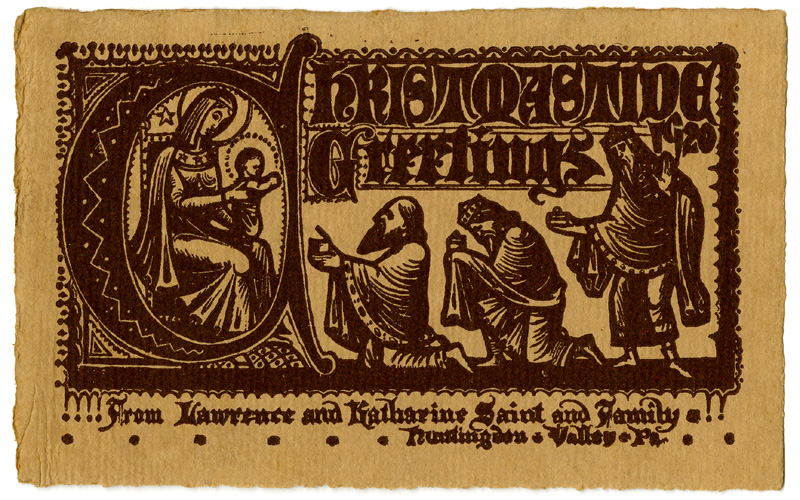
241 Stained Glass Christmas Window by Lawrence Saint (1919)

christmaswindowsaint.jpgSince the early 1990s, Glencairn Museum has displayed a Lawrence Saint stained glass Christmas window during the Christmas season in Glencairn’s Upper Hall. This two-light four-panel window (see photo, left) was originally located in Bryn Athyn Cathedral, and was designed by Saint around the year 1919, when the main building of the Cathedral was dedicated.

Lawrence Bradford Saint (1885-1961), a stained glass artist known for his work on Washington’s National Cathedral, worked on the Bryn Athyn Cathedral project earlier in his career. During his time as a student at the Pennsylvania Academy of the Fine Arts, he won a Cresson Traveling Scholarship to Europe, where his fascination with and study of medieval stained glass began. Many of his drawings of windows in French and English medieval churches were included in Hugh Arnold’s Stained Glass of the Middle Ages in England and France, published in 1913.

Saint operated his own stained glass studio in nearby Huntingdon Valley. In 1917 Raymond Pitcairn hired him to work on Bryn Athyn Cathedral, where he produced a number of windows. In 1922 Pitcairn sent Saint to England and France to make copies of medieval windows, including panels at Canterbury and Chartres Cathedral. He left Bryn Athyn to begin work on the National Cathedral in 1928.

shepherds.jpg presentation.jpg wisemen.jpg flight.jpg  

The four panels of the Christmas window depict the following scenes (pictured here left to right): Continue reading » » » »

230 Nativity Scenes by Winfred S. Hyatt (1929)

representationsmall.jpg“After the service [Christmas Eve, 1929] the whole congregation filed out to the Choir Hall, where were three beautiful representations, modeled by Mr. Winfred Hyatt, and showing in the central scene the stable at the inn with the Holy Family and those who came to see and worship the Child, while on the one side was shown the angel giving his message to the shepherds, and on the other the wise men following the star through the desert. At one end of the room were tables loaded with stockings, so that each child received one well filled with good things” (New Church Life 1930, 189).

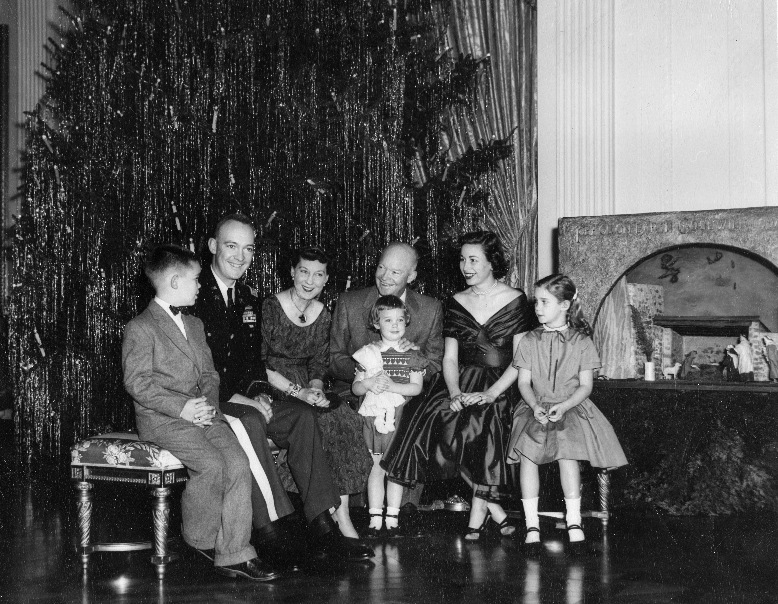
winfredhyatt.jpgWinfred S. Hyatt, the principal stained glass artist and designer for the Bryn Athyn Cathedral project and later Glencairn, made Nativity scenes for the Cathedral, the Raymond Pitcairn family, the Harold Pitcairn family, and President and Mrs. Eisenhower. The figures for all the scenes were modeled by Hyatt, then cast in plaster, painted, and clothed. Hyatt was fully responsible for all the sets made, with help being provided by other craftsmen Continue reading » » » »

228 Glencairn DVD Released This Week

glencairndvd.jpgThe long-anticipated Glencairn DVD will go on sale for the first time at the Bryn Athyn Craft Sale on Friday, November 16th. If you know someone who loves Glencairn or New Church history, this DVD may be the perfect Christmas gift. Embracing the Sacred: The Story of Glencairn Museum, a visually-rich 30-minute documentary film, has been nearly four years in the making. It is the product of extensive research and some impressive camera work.

choppersm.jpgMany residents of Bryn Athyn will remember two days of filming back in May, 2005, when helicopters spent hours buzzing around Bryn Athyn’s historic district. The first day’s attempt was cancelled due to wind gusts. The second day the choppers came late, but captured some beautiful sunset shots. The last day of filming was sunny and clear. Continue reading » » » »

225 Replica of Swedenborg House at St. Louis World Fair (1904)

eshusjpgsm.jpg“The Committee of the General Convention, which is charged with the duty of preparing for some ‘New Church feature’ at the St. Louis Fair, reports, in the Messenger for January 6th [1904], a plan to reproduce, in as nearly exact form as possible, Swedenborg’s old house on Hornsgatan in Stockholm. The house was torn down long ago, but a fine picture of it, in water color, is preserved in the library of the Academy. It is proposed to make this house a cozy centre for New Church people visiting the Exposition, and to have it furnished with a good bust as well as portraits of Swedenborg; a suitable exhibition of his Writings, with samples of the phototyped manuscripts, etc. The main idea, this time, seems to be the ‘very effective educative influence upon the minds of the youth and children of the Church,’ and as such it deserves the encouragement and support of the whole Church. The sum needed for the enterprise, is however, quite a large one” (New Church Life 1904, 104).

eshusjpgbig.jpgThe Louisiana Purchase Exposition of 1904 opened on April 30th and ran until December 1st. The call within the New Church for funds to build a replica of Swedenborg’s house at the fair was entirely successful. Continue reading » » » »

213 New Church Artist Jean-Jacques Gailliard (1890-1976)

gailliardchapelsm.jpg“At the end of 1914, and the beginning of 1915, we advertised our [New Church] Library in two Brussels newspapers, but friends advised me not to continue, as these newspapers were being betrayed to the enemy. I could not imagine any other way to attract new people to our Mission, when it came to my mind to use the art of our brother [Jean-Jacques] Gailliard. I suggested the decoration of our chapel as a possible attraction and he accepted. We studied the question together, and he made a sketch.

At that time, Mr. Melchers came to visit us, and was very much interested, but when we told him that we proposed to paint directly on the walls, he exclaimed that it would be a pity, and advised us to paint on linen so that the pictures could be removed in case of our departure from that place. M. Gailliard worked from March to November [1915], when the decoration was completed. Invitations were then printed, and a small explanatory tract.

The desired result was obtained! The impression is fairy-like! It is a dream! It is unique, not only in the Old Church, but also in the New Church, for it is a new art! A new application of the science of correspondences! Continue reading » » » »

206 88th Anniversary of Dedication of Bryn Athyn Cathedral (October 5th, 1919)

cathded2.jpg“Perhaps the deepest impression made upon us by this Service of Dedication was through the perception that the long years of spiritual depression and anxiety - states induced both by the greatest war in history and by the pangs of transition from one generation to another in the Church - that these desolate and searching years of trial had failed to destroy our faith. The prison of the years was at last broken. The famine of despair no longer weakened our energies. A sense of happiness and satisfaction flowed into all our minds, as it seemed from Heaven” (William Whitehead, “Impressions of the Dedication Service,” New Church Life 1919, 748).

cathded6.jpgThe dedication of Bryn Athyn Cathedral took place on Sunday, October 5th, 1919, during the Tenth Assembly of the General Church of the New Jerusalem. Three separate services were held throughout the day—A morning Dedication Service (attendance 900), an afternoon Holy Supper Service (attendance 500), Continue reading » » » »

205 Emanuel Swedenborg: Buddha of the North

suzukibook2.jpgThis week Glencairn Museum will be opening a temporary exhibit, “Buddhism in Pennsylvania,” and hosting a group of Tibetan monks from the Drepung Gomang Monastery in Nepal, who will be creating a mandala (sand painting). One of the events offered in connection with the exhibit and visit by the monks is a lecture by the Rev. Barry Halterman. His illustrated presentation will explore the origins and unique aspects of the Tibetan style of Buddhism, the purpose, symbolism, and ritualistic elements of mandalas, and some possible connections between Buddhist and New Church teachings (Wednesday, September 26th, at 4pm). 

Dr. Stuart Chandler of the Indiana University of Pennsylvania is the guest curator of “Buddhism in Pennsylvania.” In addition to studying Buddhism, Dr. Chandler conducts research on the evolving religious landscape of Pennsylvania, and has served as the director of the Center for the Study of Religion in Pennsylvania since its founding in 2002. After learning more about Swedenborg, Dr. Chandler has written the following: 

“The Buddhist and Swedenborgian traditions share certain basic insights about how we humans can realize complete fulfillment. The Buddha would certainly have agreed with Swedenborg Continue reading » » » »

Copyright © The Academy of the New Church
E-Mail: ed.gyllenhaal@glencairnmuseum.org

This page is powered by WordPress and is based on the Hiperminimalist Theme design by Borja Fernandez and adapted by Amos Glenn.
Entries and comments feeds.